

Hi friends 👋,
Happy Friday and welcome to the 216th Weekly Dose of Optimism!
It looks like the hacks this week broke a lot of the internet, but over here in our little corner of it, things are looking good. We have everything from cancer to plant communications to genetically engineered war dogs to basically alchemy. Once again, the week was so jam packed that we have more in the Extra Dose (7 Extras!) than we do up top.
Let’s get to it.
This week’s Weekly Dose is brought to you by… Reducto

The Only Document Parsing Product You’ll Need
Reducto is the document ingestion layer trusted by AI teams at Scale AI, Harvey, Toast, and Vanta to reliably turn complex files into structured, grounded data for production AI systems at scale. Processing more than a billion pages per month, Reducto has built its reputation on the long tail of difficult documents that break conventional OCR: dense tables, unusual layouts, handwriting, low-quality scans, strikethroughs, and formatting-dependent information.
Its new frontier parsing model, r-1, combines layout detection, reading order, tables, formatting, grounding, and granular citations in a single request. It reduces parsing errors by up to 20%, improves latency at high volumes, and costs 1¢ per page all-in.
Already using another parser? Apply for up to $5,000 in migration credits and hands-on support to benchmark r-1 against your current stack on the documents that matter most.
(1) FDA Approves Rectal Cancer Immunotherapy (+ more)
U.S. Food and Drug Administration, Jeff Tang, Coherence Neuro; video created with Runway
We hate cancer here at the Dose, and we’re not afraid to say it. It’s probably why not a single cancer reads the Dose. We’re willing to sacrifice our numbers for our belief.
Consequently, we love when humans come up with new ways to kill cancer, and they’ve done it once again (and again, and again) this week.
In June 2022, in a small trial at Memorial Sloan Kettering, twelve patients with locally advanced rectal cancer took six months of an immunotherapy called dostarlimab. In all twelve, the cancer disappeared without chemo, radiation, or surgery.
On Monday, the FDA granted dostarlimab (GSK's Jemperli) accelerated approval as a standalone first treatment for stage II and III rectal cancers that are mismatch repair deficient (dMMR). These tumors basically have a broken DNA spell-checker, so mutations pile up until the cancer looks foreign to the immune system. Dostarlimab blocks PD-1, the off switch tumors use to keep T cells at bay, which lets the immune system clear the cancer (explained in the video above).
In GSK’s 154-patient trial, after a median of 26 months, cancer hadn’t progressed in 71% of patients treated with dostarlimab alone. In MSK’s expanded 50-patient study, every patient responded, and 93% stayed cancer-free for at least a year.
Only about 3% of locally advanced rectal cancers are dMMR, per the FDA, so this isn’t a cure for all rectal cancers, let alone all cancer, but we’re getting into a pretty consistent, almost weekly, pattern of new therapies working against specific cancers, which seems like the way we’ll beat cancer overall.
In some cases, individuals are even figuring out how to cure their own, n-of-1 specific cancer.
In #177 we led with Elliot’s story on one of those people, GitLab founder Sid Sijbrandij, going founder mode on his osteosarcoma after running out of standard options. He’s one of six people Jeff Tang included in a list of those who have cured or are curing their own cancer, or a loved one’s.

But wait, there’s more!
On Wednesday, Coherence Neuro announced that it had raised a $45M Series A from Founders Fund and OpenAI “to build cancer therapy that learns.”

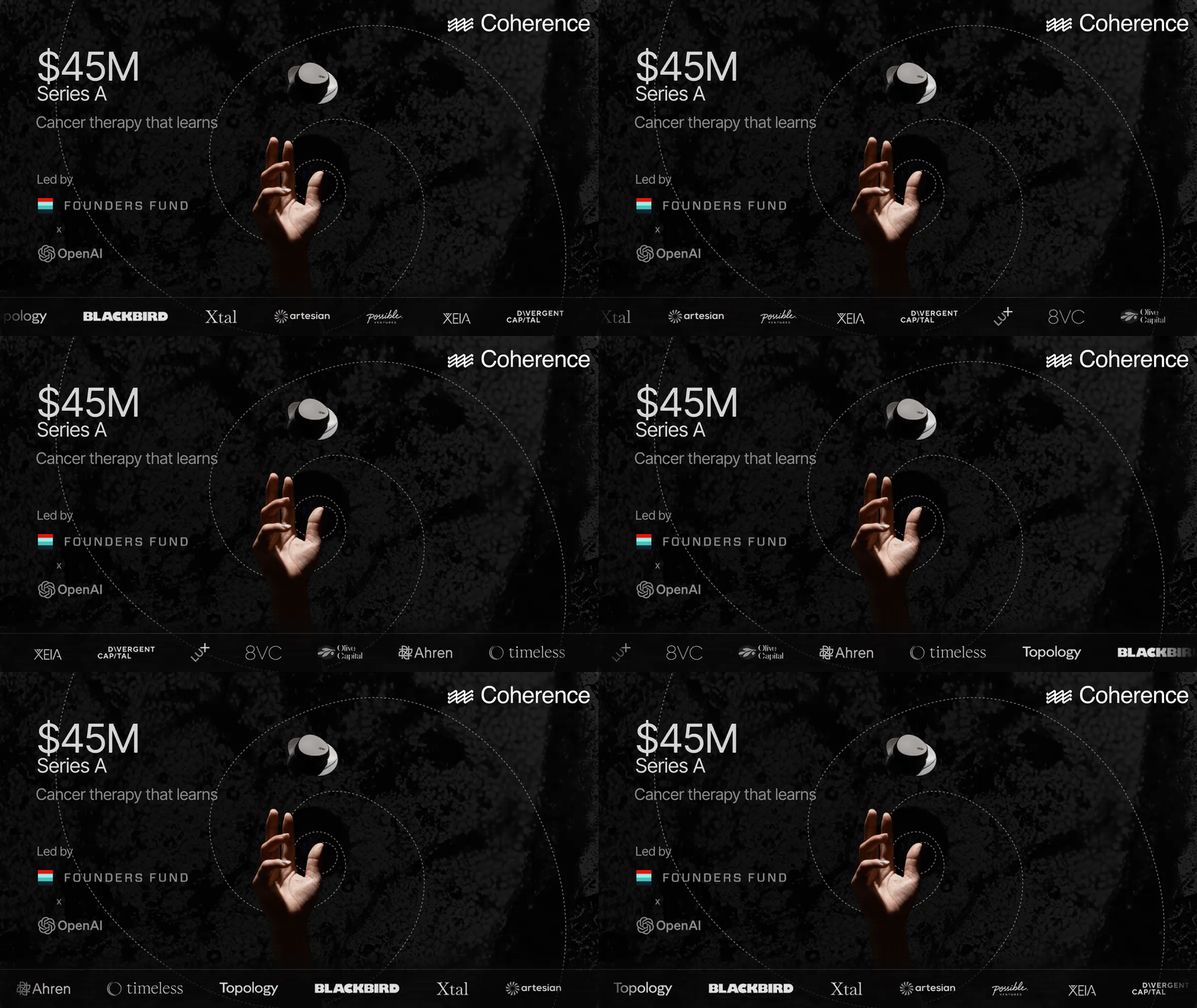
The idea is to turn neurotech and BCIs at cancer to read the electrical signals surrounding it, understand how it grows over time, and influence the electrical signals to modulate the disease. Human trials are underway in glioblastoma patients, and they’re gearing up for pancreatic cancer and more.
There’s a long way to go on these and so many of the cancer treatments we discuss in the Dose, but the promising results have become a drumbeat, and it really does seem like we’re on the path to knocking out cancer once and for all.
So say it with me, as heartily as you can: get fucked, cancer.
(2) The Nuclear Company Proposes a 6.6 GW KY Nuclear Campus
Alexander C. Kaufman for Heatmap
As much as we hate cancer, that’s how much we at the Dose love nuclear power.
We love small nuclear reactors, and we love big nuclear reactors, and we especially love a lot of either. Big week for us, then.
It hasn’t always been so good for nuclear here in the US. In the roughly 15 years it took the US to finish its first two Westinghouse AP1000 reactors at Vogtle, China built four of them, then they reverse-engineered the design into its own Hualong One, and now they have 10 Hualongs running with at least 37 more on the way. China knows that the way to make nuclear cheap is to make a lot of reactors over and over.
The Nuclear Company, which employs a bunch of people who worked and learned on Vogtle, launched in 2024 to do just that.
On Wednesday, it announced Prosperity One, a proposed campus for up to six AP1000s, about 6.6 GW, on roughly 4,000 acres along the Ohio River in Lewis County, Kentucky.
6.6 GW is an enormous amount of power. Fully built, Prosperity One would be the largest nuclear site in the US and account for over 5% of the country’s total nuclear capacity (we’re at 97GW right now).
TNC’s plan is to build two units at a time, keeping the design consistent on each, so that it can bring down costs on each successive one, a lesson learned the hard way at Vogtle. After a slow, expensive start with Unit 3, Vogtle Unit 4 came in roughly 30% cheaper and faster. TNC Chief Nuclear Officer Joe Klecha said that 30% is the floor expected savings. The company is targeting 2028 NRC approval.
At the other end of the size spectrum, the Navy picked Radiant to install its Kaleidos microreactor at Naval Weapons Station Crane in Indiana. Kaleidos is a factory-built, 1 MW reactor (6,600 times smaller than Prosperity One), that is built centrally and shipped to sites by truck, ship, or plane. When completed (the Navy wants 2028), it will be the Navy’s first shore-based advanced reactor and the first power-producing reactor in Indiana. Radiant, which we wrote a Deep Dive on in 2024, now has partnerships with the Army, Navy, and Air Force.
ELECTRONAISSANCE.
(3) Ben Lamm and Palmer Luckey Launch Warhound
I already had this whole thing written, with a different story in this slot, when the news dropped that Colossal Biosciences’ Ben Lamm and Andruil’s Palmer Luckey were teaming up to launch Warhound with a fresh $200M from investors including In-Q-Tel, Sequoia, and 8VC. The new company is worth $1.2 billion.
This is the advanced technology version of a superhero movie, literally in that we’re talking about genetically engineered war dogs and figuratively in that we’re seeing two characters combining forces within a wider cinematic universe. Per the website, Warhound is “combining licensed technology from Colossal Biosciences and Anduril,” which is just a really interesting way to start a new business.
“Animal welfare is central to that mission,” the company says on its website, “with American Humane certification supporting our commitment to the care and well-being of every dog.”
I don’t think I’m going to be able to say anything Lamm didn’t, so Per TechCrunch:
Lamm believed dogs could be enhanced for health, longevity, and “for things like speed and agility or enhance olfactory sensors for bomb sniffing and whatnot,” he said. His team looked at the top-performing working dog breeds — the Belgian Malinois and German Shepherd — taking the cell lines from them and putting them in a biobank. From there, they will edit the genes, adding the ones that will make the dogs perform better while taking out the ones that won’t, to create “a new type of dog.”
Andruil, meanwhile, will provide software and hardware enhancement for items such as dog protection vests and eye goggles to assist the dogs and their handlers with matters like situational awareness and coordination.
“The idea is, if we make the dog safer, make it healthier, make it perform better, it’s going to perform better in the line of duty,” Lamm said. He added that Anduril’s additions aim to make the dogs safer and healthier outside of their genetic components, “on top of the dog, not in the dog.” He believes such enhancements will also protect the dogs’ human handlers better.
This is not a new structure for Lamm. In late 2022, Lamm co-founded Form Bio, a software company spun out of Colossal, and he later launched Breaking as another spinout. As with Warhound, Colossal will own equity (Luckey won’t), but this time, it’s combining technological forces with another company, Anduril.
They’re good dogs, Brent. 16/10 please thank them for their service.
(4) Doris Tsao’s Lab Finds Signs of Consciousness in Time
Janis Hesse, Doris Tsao, et al. on bioRxiv, video created with Runway
Late last year, in Dose #173, we covered Dr. Doris Tsao’s joining our friends at Astera to lead a new team, Astera Neuro. “The new team’s goal is to solve one of the longest-standing, most fundamental questions: how the brain produces conscious experience, cognition, and intelligent behavior.”
Just ten months later, Tsao and team are out with their first big paper, and it’s a doozy. The video above is one attempt to explain it, and here’s the word version.
If you show your left eye one face and your right eye another, you see just one face. Instead of blending them, one just vanishes from awareness, even though it’s hitting your retina. Neuroscientists use this trick, called binocular flash suppression, to separate what the brain receives from what it’s aware of.
The textbook belief has been that this happens because the suppressed image fades as signals move forward through the brain and never “ignites” into awareness. Last week, a team led by Janis Hesse in Tsao’s lab found a different explanation.
Recording thousands of neurons in the face-processing regions of two macaques’ inferotemporal and prefrontal cortex, they found that the same neurons alternate roughly every 60 milliseconds between representing the face the monkey is aware of and the one it isn’t. When they reconstruct an image from one set of moments, they get the conscious face. But when they reconstructed it from the others, they got the suppressed face in full detail.
So why are we only aware of one? Still need to figure that out.
But Tsao called it the most important discovery of her career, because it means that a decodable signal deep in the brain exists even for things you’re not conscious of, so scientists can now follow both faces and figure out exactly why we become aware of one and not the other, which should give deeper clues to how consciousness works.
Human consciousness research is one of the areas I’m most fascinated by, and I hope that this is the first of many breakthroughs from Astera Neuro and others.
(4a) Electric Plant Company Releases Bombadil to Speak Plant
As we better understand our own human brains, humans are also making progress in understanding the language of… plants.
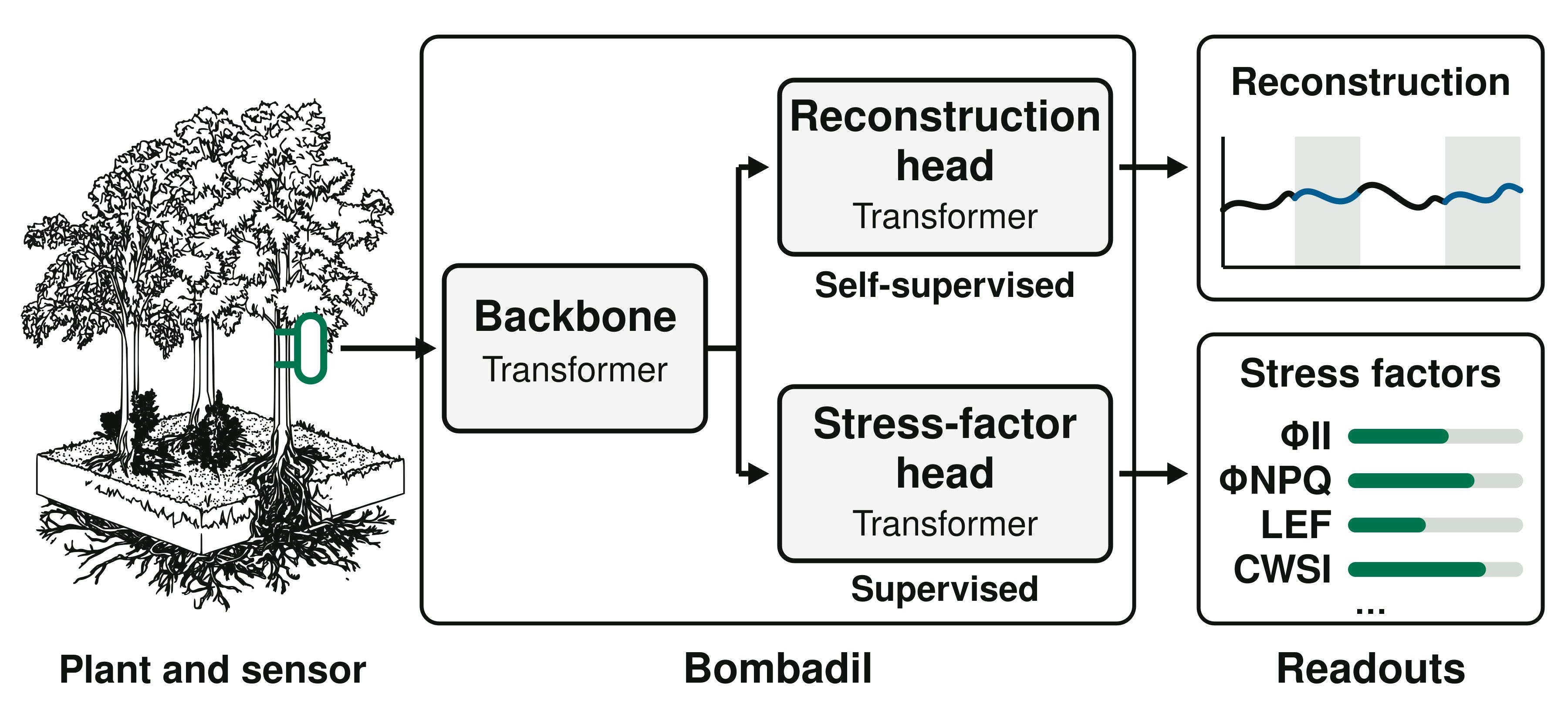
Electric Plant came out of stealth this week with $11.2 million in funding and a foundation model, Bombadil, that reads electrical signals from inside living plants and translates them to estimate seven kinds of stress, like thirst and nutrient needs. Bombadil was pretrained on more than 4 million hours of recordings from 100 species, from redwoods to tomatoes, captured with sensors that cost tens of dollars. Co-founder Justin Mast, who founded Bloomscape, compares it to one model that reads the brainwaves of blue whales, horseshoe crabs, and fruit flies, given how diverse plant species are.
Practically, in the near-term, the company thinks it can cut farm water use by 20% or more with its models and sensors, which is important and economical, but more wildly…we are learning the language of plants? And it’s bioelectric?
I got to see a preview of this at Onto Ventures’ summit in California a couple weeks ago and it was one of the most mindblowing demoes I’ve seen. Justin is kind of like the Lorax, but he speaks to the trees.
(5) Marathon Fusion Says It Turned Mercury Into Gold
We cover a lot of impressive accomplishments in the Dose, like talking to plants and curing cancer, but it’s not every day that we cover a company that’s succeeded where the inimitable Sir Isaac Newton failed.
That’s what Marathon Fusion has done. Newton, under the pseudonym Jeova Sanctus Unus, spent three decades trying to crack alchemy, as I wrote about in Take Weird Ideas Seriously. I think it’s great that he tried. He just didn’t have the technology.
Marathon Fusion seems to. Co-founded in 2023 by CEO Kyle Schiller and CTO Adam Rutkowski, a former SpaceX propulsion engineer, the company posted that last month it turned mercury into “real, stable gold” at ten times the rate of CERN’s 2025 record. CERN's version produced about 29 picograms across four years of collider runs, so we’re not talking Fort Knox, but the physics is real. Fast neutrons from a deuterium-tritium fusion reaction knock a neutron out of mercury-198, which becomes mercury-197 and decays into gold over a few days.
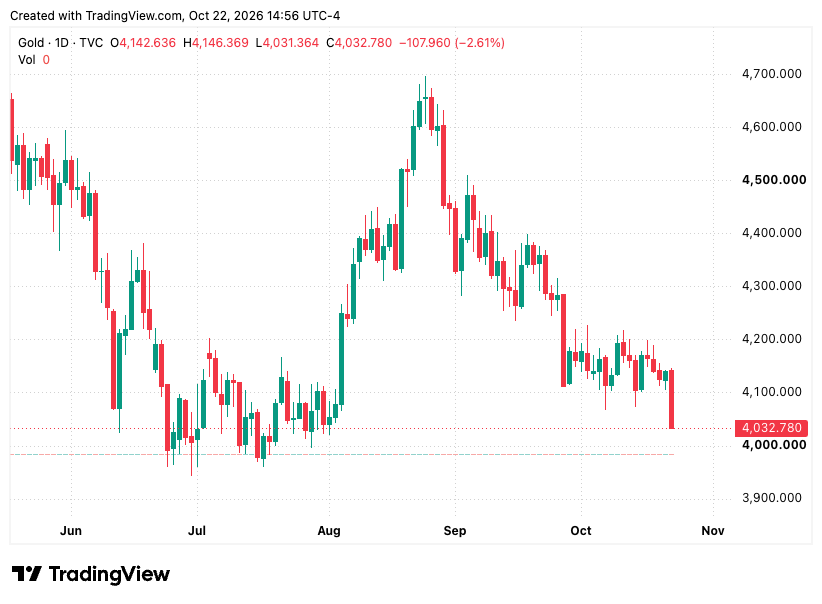
Gold dropped pretty hard yesterday (unsure if related), but for now, it’s just a demonstration.
In the nearer-term, Marathon will use the technology to make medical isotopes. Neutrons that can turn mercury into gold can also turn zinc into copper-64 and copper-67, used in cancer imaging and targeted radiotherapy. Marathon says it has started making both.
The neutrons can make a lot of things. In August, outside testing lab Covalent certified that Marathon’s plasma centrifuge had enriched lithium-6, which fusion plants need to breed tritium fuel, and this week the company said a new run beat a Soviet record that had stood for 40 years. Next is a fusion reactor in San Francisco designed to fire a trillion neutrons a second into a one-centimeter target, continuously, for years.
It’s a very Fuse-like bet that the neutrons produced in fusion reactions can be very valuable long before Q>whatever, and a Small Steps approach to fusion.
Or as Mike Meyers would say, “I LOVE GOOOOOOOOLD.”