


Hi friends 👋,
Happy Friday and welcome back to our 206th Weekly Dose of Optimism!
This is a few minutes late because I thought it was a pretty slow week and had it all set and then new stuff just kept coming out, including Anduril announcing that they’ve launched a satellite, and I had to re-jigger things, which goes to show that the good guys and gals won’t even take one week off.
There are lots of goodies in main and in the Extra Doses, but if you have some extra time this weekend, get yourself a nice big iced coffee and read the third chapter in the Base Power Company story.
For now…
Let’s get to it.
Today’s Weekly Dose is brought to you by… Matic

It’s not actually brought to you by Matic. They’re not paying me and they didn’t ask me to do this, although they did give me a free Matic when it first came out. They don’t even know I’m doing it.
It’s just… we didn’t have a sponsor this week, and as I was playing with the Matic’s new voice control last night, I realized that it’s one of the most delightful things I own and I wanted to share it with you.
Anyway, you should do yourself a favor and buy a Matic for your home.
(1) Avidrone wins DARPA Heavy Lift Challenge
This week, DARPA held its Heavy Lift Challenge, a competition to see whether a drone could complete a course while lifting 4 times its own weight. Hunter Weiss has been going viral all week posting the videos.
A Canadian company called Avidrone won with its Katana uncrewed aircraft. The 29.3 lb drone completed the course in 19:17, while carrying a payload of 112.4 lbs… just shy of the 4x mark at 3.84:1, but better than anyone else. They tried to hit 4:1 one final time and crashed hard. In any case, they won 1.25x.
There are military reasons for wanting heavy-lift drones or DARPA wouldn’t have done this, but the reason it’s leading off the Dose is that getting drones to be able to carry more weight, further, for less money will reshape the world like nothing since the car.
Katana isn’t what that future will look like, but it’s a fun little preview. Stay tuned.
(2) Josh Kushner, Bob Iger to Buy Lakers for $12.5 Billion

When Thrive Capital announced Thrive Eternal in April, it prompted me to write an essay on Scarce Assets. I wrote:
Last Friday, Josh Kushner announced Thrive Eternal, the firm’s permanent capital holding company that will concentrate in a small handful of “Iconic franchises and cultural institutions rooted in tradition, identity, and shared experience,” starting with the San Francisco Giants.
And look, the Giants are fine. Not having a great season, but a solid baseball franchise. A nice starter purchase for Eternal.
The Lakers, though? Iconic. Rare. The scarcest of the scarce.
Imagine agreeing to terms courtside at the Lakers, one of the places to be seen. A founder pic courtside with Josh could send a company’s valuation up a billy.
Per Sportico, the $12.5B transaction set a new record price for an NBA team, surpassing… Mark Walter’s purchase of the Lakers last year.

That chart should look comfortably familiar to a venture capitalist, and it shows no signs of slowing. While there’s a new $10 billion big lab spinout neolab every week (see: Jeff Dean’s Disco Loop is in talks to raise $1B at $10B), they aren’t making any new Los Angeles Lakers. As Matthew McConaughey might say in a Dazed and Confused remake, “You know what I love about these Scarce Assets man? People keep getting richer, but they stay the same amount.” Or whatever.
In related news, Thrive Holdings, the firm’s fund that owns and operates accounting and IT services businesses, raised a fresh $2 billion yesterday, too. Chapeau.
(3) Recast Comes Out of Stealth to Give Humans Agency Over Weather
We now live in a world in which there are two American startups run by young geniuses attempting to help humans direct the weather, which is awesome. Doing so might mitigate disasters, like droughts and floods, and allow us to take a more proactive approach to things like energy and terraforming.
Recast Systems, “a weather company,” has been busy while it’s been quiet:
In the past 6 months we’ve produced a cheaper, more efficient seeding material, trained a hyper-resolution AI weather model, and operated 100+ cloud seeding flights for the governments of Texas and New Mexico.
We’ve covered Rainmaker a bunch of times in the Dose, and in The Great Differentiation, in which I wrote that they’d earned their differentiation by doing something incredibly cool in the physical world (flying drones into clouds).
What I think is great about Recast’s launch is that they’re carving their own distinct, differentiated brand in the space. It’s more science-forward, more handmade. You can see it in founder Olivia Li’s behind the scenes here, and in the images they chose for the unstealthing thread. This is the first one:
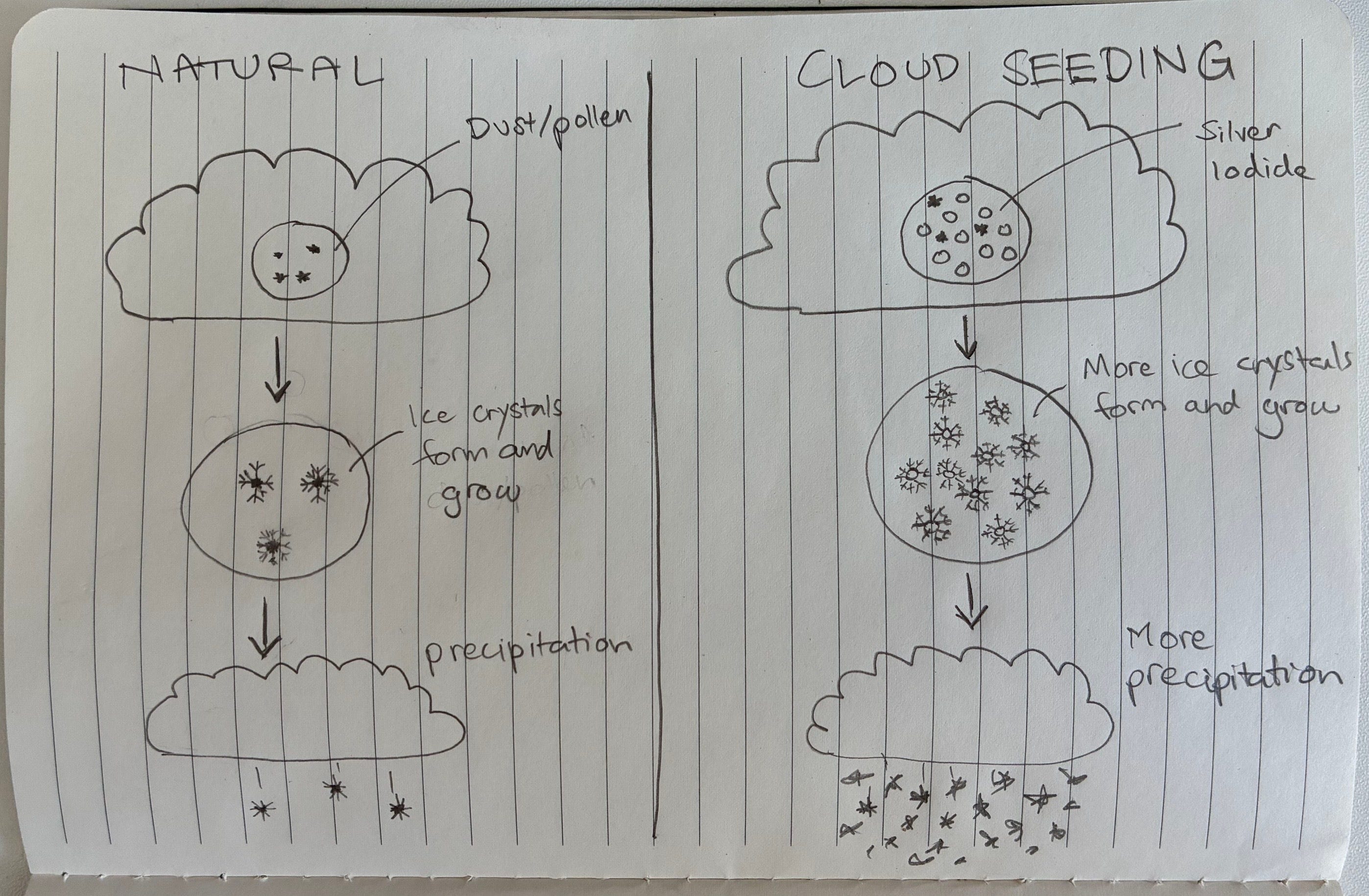
This is the next:
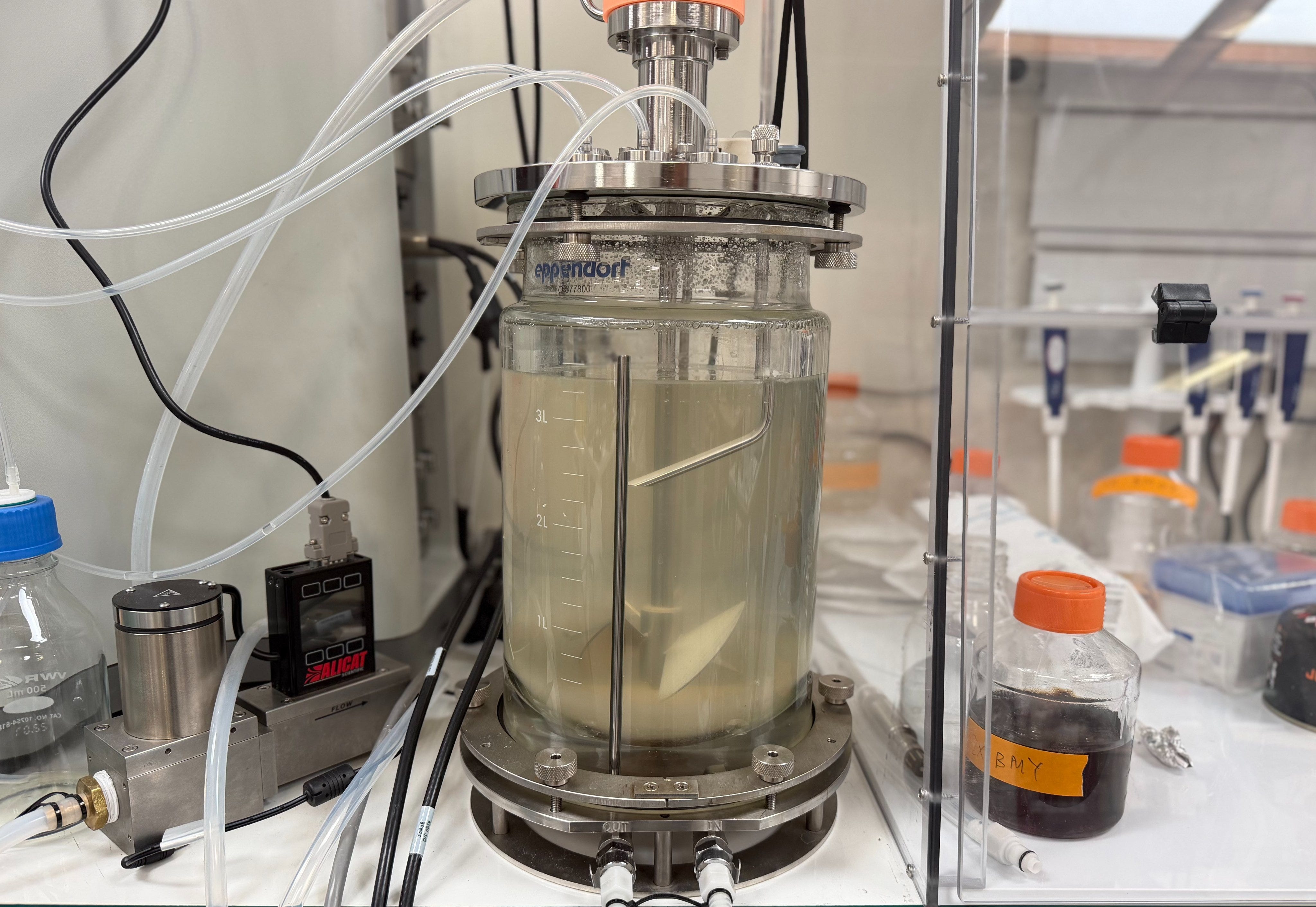
The sky is a really big place, and beyond cloud seeding, “the weather” is even bigger. There will be multiple winners, and the addition of a second credible startup, with a totally different vibe, adds credibility to the whole space. I think both Rainmaker and Recast will do great things, and I hope they do them ASAP.
To summarize: a few years ago, we had no weather startups. Now, we have two. I guess… when it rains, it pours.
(4) Fuse’s Faeton-X Hits 1.27×10¹² Neutron Yield
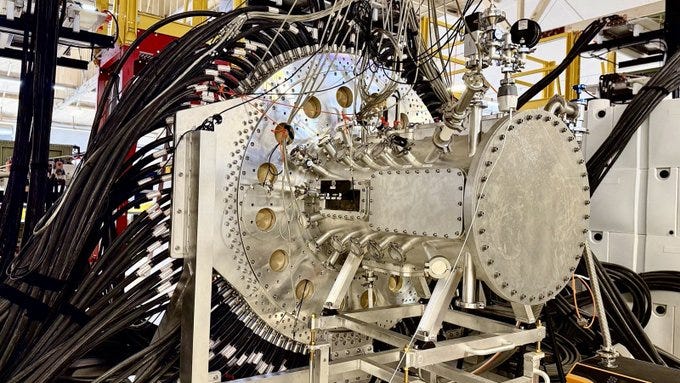
Compared to every other fusion company, the thing I love about our portfolio company Fuse Energy (aside from the founder, JC Btaiche) is that it generates revenue by selling radiation on the way to generating power from fusion.
When I wrote about the company in May 2024, I described a couple of paths. The TITAN path - from TITAN to Z STAR to APEIRON, is what will ultimately deliver fusion power to the grid.
The FAETON path, while not the path to fusion directly, produces valuable neutron shots: “In the near-term, Fuse actually expects to make more money from FAETON II shots than it does from TITAN II shots, because the value of FAETON II’s neutron-producing shots are twice as valuable as TITAN II’s.” Defense contractors and satellite makers pay tens of thousands of dollars a shot to blast their electronics with neutrons to find out whether they could survive a nuclear detonation or a decade of radiation in orbit.
FAETON also uses some of the same components, namely the Brick, “the high-voltage capacitor and gas switch that is the fundamental building block of its pulsed power generators”
All of which is a long way of introducing the importance of this breakthrough. This week, Fuse published results from FAETON-X, showing that it generated 1.27×10¹² fusion neutrons in one shot, making them the first fusion company to publicly document a yield in the 10¹² range.
Importantly, though, they did it with a higher current efficiency than the labs: 4.5 MA/MJ, highest current efficiency ever for a MJ-class plasma focus, against 2.35–3.25 for all published peers including government machines. It took Livermore’s MJOLNIR 1.3 MJ to produce 1.2×10¹² neutrons, where it only took Fuse 1 MJ to produce its 1.27×10¹².
That is important, because yield in pulsed-power z-pinch devices scales as the fourth power of drive current. Current efficiency is the compounding variable of which yield is the derivative. 40% more current per MJ gets you 4x more fusion, not just 40% more.
This is maybe the most important curve for Fuse: neutrons per megajoule of capacitor bank. On Faeton, it means delivering those valuable neutron shots more efficiently. On the TITAN path, it means that everything gets smaller and cheaper for the same current, which could mean getting to fusion power, and making it cheaper, sooner.
This is the Fuse thesis, too. Instead of straight-shotting fusion like competitors, get out in the field and start selling. Iterate. Improve the brick on FAETON, and bring it to TITAN. Move fast. They went from design to first shot on FAETON-X in nine months, and from first shot to record in another nine. Keep interacting with the messiness of the real world, keep iterating, and maybe one day the iterative approach gets you to the end goal faster.
If not, there’s a lot of very useful stuff you can do with all that radiation at Q<1.
(5) Matic Now Lets You Talk to Your Robot
I love our Matic. It reliably vacuums and mops. It’s proof of the saying that something is called a robot until it works. The Matic robot works, so we just call it the Matic.
Yesterday, the Matic reintroduced the magic. You can (and last night, I did) talk to it, and tell it where to clean. From the company’s tweet:
1. Say "Hey Matic" - it locates your voice, turns, and looks at you
2. Say "Hey Matic, follow me" and start walking. Matic will follow behind
3. Say "Hey Matic, go clean the living room". Since it knows your house map, it navigates and just does it
People think the path to robots doing useful things in our home will look like a person. Matic’s bet has been that it’ll just be really useful at one thing, and then get useful at more things. So far, it seems like the right bet.