

Hi friends 👋,
Happy Friday and welcome to our 221st Weekly Dose of Optimism! Hope all of you turkeys who celebrate Thanksgiving had a great one. Go Birds 🦅
Appropriately, we are … stuffing … this one full of the good stuff, including a whole Elonverse bonus section.
Fun little bonus from the notboringverse, too. After I shared the new notboring.com last week, a reader (Kevin) asked if I could make a searchable site for all of the Doses. I can’t, but my new fav model from the Dose’s favorite lab, Google’s Gemini 4 Neon, certainly could. You can find all of the Doses, along with news updates on previous Dose stories, here.
Let’s get to it.
This Week’s Weekly Dose is brought to you by… Guru

Give your team AI answers backed by verified knowledge.
AI answers are only as good as the knowledge underneath. When your policies live in five places and half your docs are stale, your AI repeats the wrong version with total confidence. Nobody can tell which answer is right.
Guru fixes the problem upstream, at the source. Guru structures your company’s knowledge and flags anything outdated or conflicting. The right owner approves each fix, so your people and AI tools pull cited answers from one governed layer.
Companies already running on Guru:
Faire raised content trust from 76% to 96% and cut weekly verification from six hours to under one. Lemonade runs about 12,000 questions a month through Guru, and 9 in 10 agents use Guru every week. HireVue cut new-hire ramp time from five weeks to two weeks.
Grab a demo to see what Guru could do for your team →
(1) Alpöge & Claude Prove 167-year-old Riemann Hypothesis
Ben Cohen and Joshua Robinson for WSJ; video created with Runway
Last Friday may have been the most important day in mathematics in the past two centuries, although I’m sure there will be many more important ones to come.
Anthropic mathematician Levent Alpöge dropped a 17-million-line formal proof in Lean of not just the Riemann Hypothesis, posed by Bernhard Riemann in 1859 and the crown jewel of the seven $1 million Millennium Prize Problems, but the Generalized Riemann Hypothesis for Dirichlet L-functions.
Alpöge developed his proof over six weeks alongside an unreleased frontier version of Claude. Within 24 hours, on Saturday afternoon, the Lean FRO and Mathlib Initiative jointly certified that both the theorem statement and the proof are valid after dozens of volunteers compiled the codebase and ran it through multiple independent, formally verified proof checkers: “We have full confidence that Alpöge's proof of the Riemann Hypothesis is correct.”
There was a bit of controversy after Alpöge joked that he had a 250,000 page version of it or something (I don’t get the joke) but what’s true is that no human can read the proof yet. here is no natural-language paper, only machine-verified code that Terence Tao noted appears to draw on “the full power of modern developments on the Langlands program and arithmetic geometry” (and as one number theorist put it, “basically contains all number theory produced in the last 50 years”). Whatever, he cracked it. Or they cracked it. Steven Strogatz called the duo “a very skilled AI jockey riding a very fast AI horse.” Welcome to Centaur Math. Lean has checked that the proof is mathematically airtight before humans can understand it.
Oh, and both Anthropic and OpenAI also posted AI-generated proofs of VP ≠ VNP, which is the algebraic cousin of the longstanding P vs. NP problem, which has been open since 1979, may invalidate a lot of cryptography if proven that P = NP, and rumors are, the labs have cracked that one, too.
I told you things were going to keep getting wilder.
(1a) ven chandrasekaran’s proposal for a quantum theory of vacuum gravity in 4d


lol. It’s Thanksgiving week, so I wrote that line on probably getting even more important breakthroughs in the future on Wednesday. Then late that night, OpenAI employee and pseudoynmous man about the internet, roon, shared a link to his colleague’s proposal for a quantum theory of vacuum gravity in 4d.
And look, Ven Chandrasekaran got to use AI to help with the paper it, so for those interested in the details, I’m going to use AI to explain it:
Chandrasekaran’s paper proposes a concrete, background-independent quantization of pure (vacuum) general relativity in four-dimensional Lorentzian spacetime. It starts from first-order gravity, solves the constraints on intersecting null cones, defines a nonperturbative algebra of observables, builds a Hilbert space, and constructs a Lorentzian path integral. It then checks consistency by recovering known results: the Bekenstein-Hawking black-hole entropy (including the one-loop logarithmic correction that matches Sen’s earlier Euclidean calculation) and the semiclassical Einstein equations as the low-energy limit. In short, it is an attempt to turn general relativity itself into a quantum theory that passes the minimal tests any such theory must satisfy.
The paper still needs to be checked by other physicists (and their AIs, I’m sure), we’ll need to run experiments eventually to confirm, (per roon: “direct experiments for quantum gravity corrections that only show up at incredibly high energies are not possible with current technology), and it only covers vacuum for now, not matter. So we do not yet have an operational Theory of Everything, nor, based on early commentary I’ve seen from supergeniuses, is it likely that this will be the one when all is said and done.
But this is pretty exciting work for a Wednesday night.
(BONUS ELON SECTION) A Little Thanksgiving Treat
Speaking of awesome things that happened after I finished writing the Dose…
Three, count ‘em three, things from the Elonverse.
SpaceX and Elon are Giving Every American Kid Two Shares

“Every child in America will receive two SpaceX shares, one from the company” and one from Elon Musk personally. If you haven’t already, sign your kids up for their Trump Accounts to get them. This is incredibly cool.
Not Investment Advice, but Elon tweeted that “If SpaceX succeeds in making life multiplanetary and harnessing even a millionth of the Sun’s energy, it will be worth about a million times the current global economy.”
Update: kids will get even more of that upside. Elon followed up to his original tweet saying that he’s planning to give an additional share to every child in America every year. He currently controls about 6.4 billion shares, and there are something like 72 million kids in America, so assuming we have about the same amount each year as age into adulthood, he’ll have given more than 10% of his ownership to America’s kids in the next decade.
What a time to be a kid in America.
FCC Authorizes SpaceX to Deploy 1 Million Orbital Compute Satellites


The kids are going to own a piece of the largest space data center constellation in the known universe. The FCC has given SpaceX the first authorization in U.S. history for a constellation of data centers in space. Now they just have to make a million DC satellites and send them up on Starships, which became fully reusable last week.
Neuralink Gets FDA Approval to Launch LINK
The Elon approvals keep on coming! On Wednesday, the FDA gave Neuralink approval to launch LINK, “the first pivotal trial for an implantable brain-computer interface in the US.” Patients with ALS may be eligible.
Spreading this technology will be pretty incredible, given that Neuralink has already given voices back to those who’ve lost them, allowed people who can’t move their muscles to control computers, and even, this week, let one of its early patients play GTA VI with their brain. Truly miraculous technology.
To learn more about Neuralink, I highly recommend Cleo Abram’s recent video or Ashlee Vance’s great essay in the new LIFE Magazine, The Merge.
(2) U.S. Senate Passes Bipartisan Permitting Reform, BAAJA
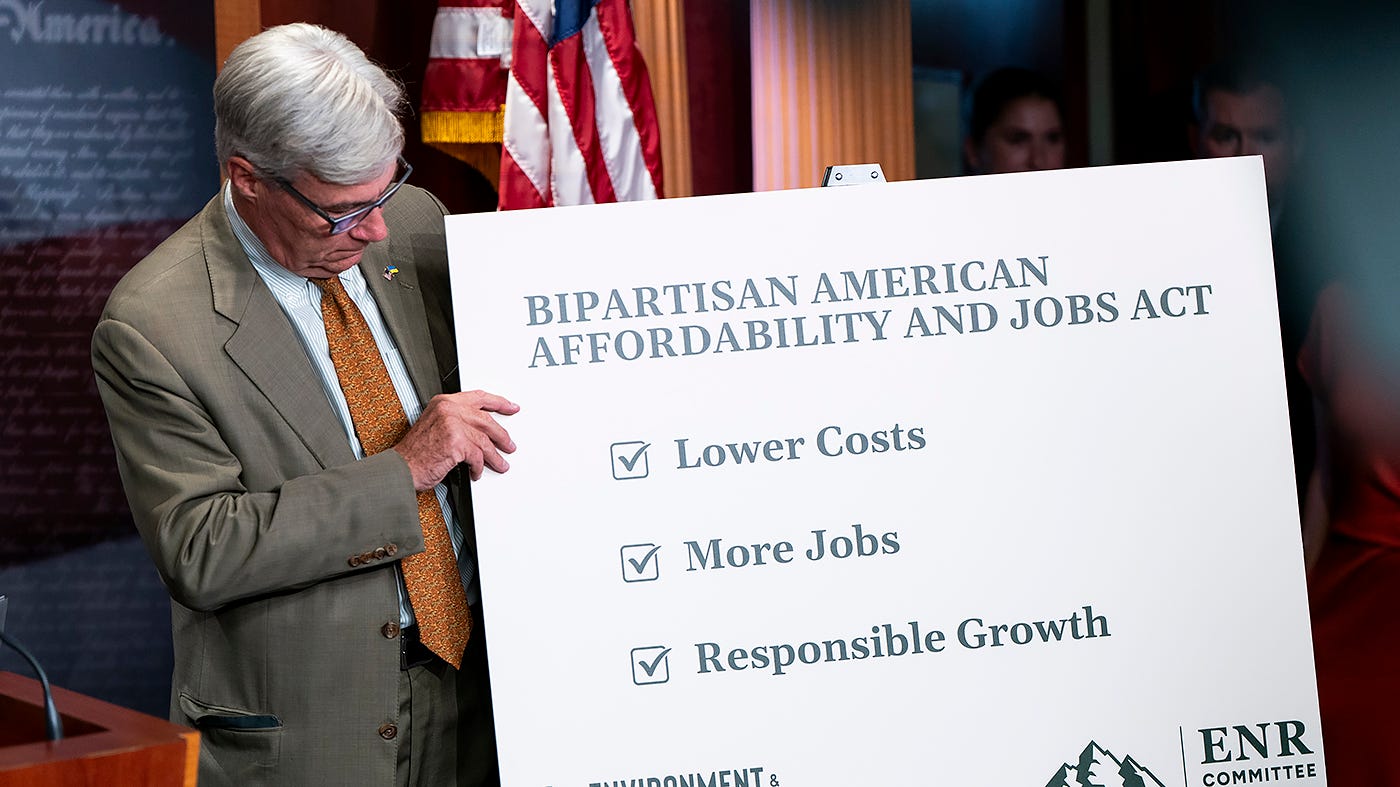
Back to our regularly scheduled programming… We might need to grab WTFhappenedin2026 dot com. It could get a lot easier to build big things, from solar farms to subway lines, in the United States.
Last Friday, right after we hit send on last week’s Dose, the United States Senate passed big, bipartisan abundance legislation. By a 62–33 vote, the Senate approved the Bipartisan American Affordability and Jobs Act of 2026 (BAAJA, H.R. 2347), sending the sweeping permitting reform package to the House this week with a bipartisan push to get it to the President’s desk before he heads off for Christmas at Mar-a-LaHoHoHo.
BAAJA would blast through the bottlenecks that make it so hard to build physical infrastructure in America by streamlining NEPA, Clean Water Act, and Endangered Species Act reviews. It includes dedicated provisions to accelerate electric transmission lines, nuclear energy licensing, energy permitting more broadly, and data center projects, all things we have cited as issues in the past in this very newsletter.
We can make all of the breakthroughs we want - new reactor designs, more generation, Riemann Hypotheses, etc… - but if it takes a decade to turn those things into physical infrastructure in the real world, we’re kneecapping ourselves from the benefits. BAAJA does a good job at making changes that will speed all of those things up without harming the environment. In many cases, it will help accelerate the transition to clean energy. The real losers on this one are those who like paperwork and dislike progress more than they actually like the environment.
We’re not quite there yet. The House needs to vote and the President needs to sign (hard to imagine him vetoing a bill for Builders, but who knows with this guy!). But getting 62 votes on something this big in the Senate is a great step and an important one in the march of progress.
(3) Hadrian is Opening a Factory in San Francisco
Startups are trying to pull off a lot of impossible things these days, but opening a 1 million square foot factory right in San Francisco might be one of the craziest.
That’s what not boring capital portfolio company Hadrian is doing. They plan to open the SF development factory and engineering campus in January of next year.
You can read more about Hadrian in our 2022 Deep Dive, but the basic idea from the beginning has been that they are pairing humans and software to make more of the parts that American companies need but can’t get.

They’ve come a long way since that piece, having recently raised $1.37B at $7.87B (78.7% away from my prediction that it could become a $10B company, back when that was a huge number), and the software they get to work with has, too.
AI (or SI, whatever) helps them automate more of the work and learn more quickly from the humans with tribal knowledge who are a crucial part of the operation. And if you’re trying to recruit AI talent, there’s nowhere better to do it than in the heart of Frisco.
I think if you’d told me they’d be building a million sf facility by 2026 back when I wrote that piece, I probably would have believed you. Chris is a maniac. But 1 million sf in SF? A lot has changed in the past four years, for the better.
(4) Capable Comes Out of Stealth with Autonomous Preclinical Lab
There is so much happening in AI x Bio that I tend not to include most of the announcements in the Dose until a little later in their lives, when they’ve delivered meaningful results. That said, I’ve heard from multiple really smart people that Capable’s founder, Isaak Freeman, is one of the most… capable founders they’ve ever met, so I’m flagging this one early.
Capable’s website starts out with a tagline we strongly agree with here at the Dose: “Humans are Capable of Greatness.” They want to help us catch up to and surpass AI. To do that, they’re building a “vertically integrated, AI-enabled, deeptech platform to rapidly explore and unlock new human capabilities.” We’re fans of vertical integration here, too. The logic is that to make use of AI’s capabilities in order to give humans superpowers, you need to be able to run experiments, generate data, learn, and run more experiments.
They’re starting with peptides, but the site hints at where they want to go. It says that “Humans are capable:
Of Having More Endurance
Of Living Longer Lifespans
Of Having More Energy on Less Sleep
Of Having Unbreakable Bones”
… and more. Let’s hope Isaak and team are capable of delivering on that vision.
(5) Patient Marks One Year Living With Pig Kidney
Roni Caryn Rabin for The New York Times
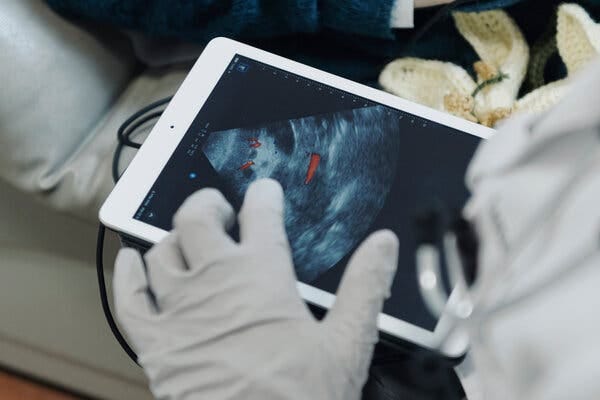
One of the most fun parts of writing the Dose for as long as we have is that we’ve gotten to track stories as they’ve gone from sci-fi to early testing to early results to just a part of life. Like pig kidney xenotransplantation.
We've been tracking pig-to-human kidney transplants all the way from the earliest tests in brain-dead patients in Dose #56, through the first living human recipients and early milestones in Doses #86 and #146. On Sunday, November 22, the field crossed its biggest threshold yet: Molly Falco, a 58-year-old mother of two and former chef from New Hampshire, became the first person in history to live a full year off dialysis with a genetically engineered pig kidney, as reported by The New York Times and announced by Mass General Brigham and eGenesis.
Falco received her kidney (which she named Lily, after flowers her family in Colorado sent her) at Massachusetts General Hospital last November. Developed by George Church spinout eGenesis, the organ carries 69 (we made this joke in #146 already, but… nice!) genetic edits to make a Yucatan pig kidney play nice with the human body by inactivating pig retroviruses, knocking out three glycan antigens that trigger immediate rejection, and adding seven human genes to regulate immune response, inflammation, and clotting.
Before the surgery, Falco spent 11 grueling months on dialysis, too sick to even drive. Now, with her pig kidney, she hasn’t been hospitalized since February, is back to driving, and just got cleared to travel to Colorado this Christmas, where she’s planning on trying to ski the bunny slop with her kids!
“I’m amazed every day that it’s still working,” she told the NYT. “I’m going to try to keep it going as long as I can, and if that’s forever, that’s incredible.”
The pig kidney transplants are going to keep going, too. Of the six patients who’ve received them since 2024, three currently have them functioning (including Falco and two who received them this year), and eGenesis is launching formal trials in Q1 next year in 33 patients. We even have competition! Last Friday, United Therapeutics performed its first pig thymo-kidney transplant, and the company already has FDA clearance for a pig heart trial, too.
More than 500,000 Americans rely on dialysis (which has a five year mortality rate of 55%, worse than most common cancers), with more than 90,000 people on the kidney waitlist at any given time. Twelve Americans die waiting for a kidney every day. Thanks to our porcine friends, that may not be the case for much longer.
This is what it’s all about. We humans have a lot to be thankful for.