

Hi friends 👋 ,
Happy Friday and welcome to our 199th Weekly Dose of Optimism! For some reason, maybe it’s the fantastic summer vibes, this one was particularly fun to write, so without further ado…
Let’s get to it.
This Week’s Weekly Dose is brought to you by… Mercury

Heads up: This is how banking* works now
You’ve seen what AI can do when it’s built into the right system. Mercury Command is that for your finances.
Say what you need and the work gets done — payments, forecasting, categorization, invoices — across all of Mercury. You approve every action, and every answer is generated from your Mercury data with full account context and a traceable record.
No dashboards. No exports. No friction. Just total command.
Try Mercury Command →
*Mercury is a fintech company, not an FDIC-insured bank. Banking services provided through Choice Financial Group and Column N.A., Members FDIC.
(1) Stripe Launches Intercept to End Respiratory Infections
Nan Ransohoff for Stripe
I have had a cold all week. You forget how little fun a cold is! It sounds innocent, if annoying, a little cold. You don’t want to be the guy who complains about a cold. Rub some dirt in it, get back to work. But I’ve been operating at like ~40%. It would be way better if I didn’t have a cold…
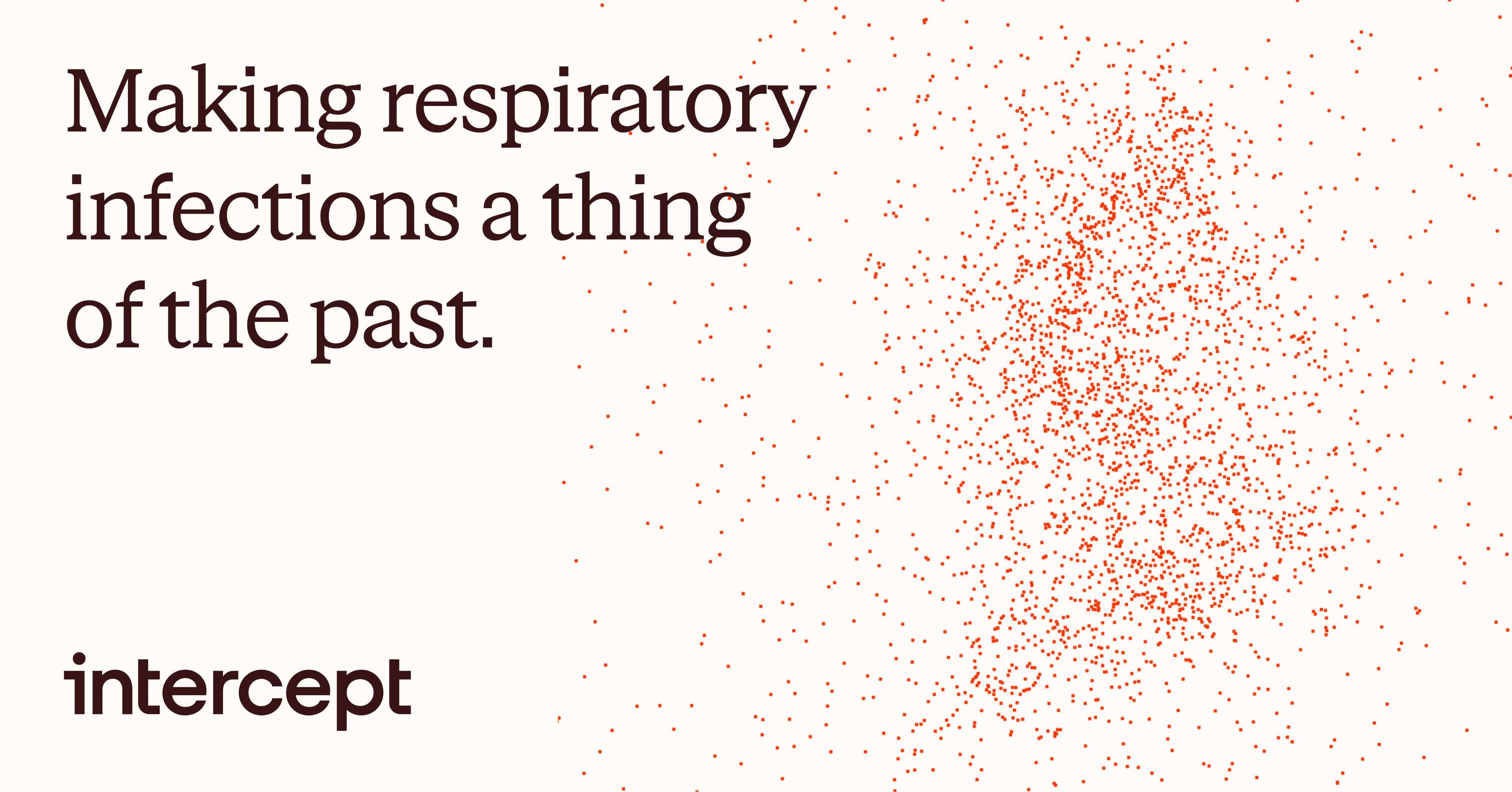
And thanks to a new effort from Stripe, in the future, I (and everyone else) may not have to. Nan Ransohoff, who runs Public Goods at Stripe, announced that they’re launching Intercept: “a $500M philanthropic initiative to make respiratory infections, like the common cold and flu, a thing of the past.”
As Nan wrote:
We treat respiratory infections as a minor nuisance, but that’s really not the case. Most of us will spend 5% of our lives (!) sick from these viruses, they kill 1M people a year, cost $600B annually in productivity, and periodically threaten civilization through pandemics.
But respiratory infections are technically challenging and they’ve been underfunded, so we haven’t made much progress against them. Every year, we just accept that part of our year is going to suck (more time if we have kids, and suck more if it’s a particularly bad virus that kills us).
Intercept is solving the underfunded part, with money from Stripe, Anthropic, The OpenAI Foundation, Flu Lab, and people from Jane Street. It believes it can solve the technical parts, with a mix of broad-spectrum preventatives and air cleaning technologies.
Obviously, I hope they pull it off, and I think they will, but in any case, bravo to Nan and Stripe for continuing to rethink what modern institutions can to against the big problems facing humanity, and to the funders for taking a big, concentrated swing. This is what our billionaires should be doing, and I hope as many people copy Stripe here as copy the design of their homepage. Magnificenza!
(2) Congress Passes 21st Century Road to Housing Act
Ronda Kaysen for The New York Times

On Tuesday, the House voted 358-to-32 in favor of a bill, the 21st Century ROAD to Housing Act, in a touchingly bipartisan agreement that we need to build more housing in this country.
Vacancies are too low, mortgage rates are elevated, home prices keep rising, and the rents are too damn high! The bill, negotiated over many months, aims to bring down housing costs using a number of tools:
It loosens federal regulations, making it easier, faster and cheaper to build; eases lending rules; rewards communities that build; delivers aid to communities reeling from disasters; and, in a policy that proved to be one of the biggest flash points but was favored by Mr. Trump, sets new limits on the role institutional investors can play in the market.
Hear hear. We at the Dose are big believers in making it much much easier to build new housing, through regulatory and technological means. Not Boring Capital invested in Cuby to tackle the technical part, and now the government is doing its part to clear the way for new homes.
This is an obvious one. Voters, whether R or D, want to be able to afford a place to live. It’s clear that many rules in place get in the way of that happening.
No one in their right mind would oppose this thing…
To that end, President Trump is currently refusing to sign the bill unless Congress passes his SAVE America Act (his priority elections/voter ID legislation, which he called a “National Emergency”), and has doubled down since, telling House Speaker Mike Johnson “nobody gives a f*ck about housing” and telling the press that he’s not signing it because he doesn’t want to lower home prices for those who own them.
As of this morning, Speaker Johnson said that he’s formally sending the bill to the White House after a productive conversation with President Trump.
So, optimistic because a healthy majority from both sides understands that a lot of Americans do give a f*ck about housing and are finally doing something about it, and because the majority is so strong that it’s veto-proof, but also a good reminder that these NIMBY f*cks can be really dangerous.
(3) U.S. Bets Billions in Low-Cost Loans Can Revive Nuclear Power
Jennifer Hiller for WSJ

Another big week for nuclear!
On Tuesday, the Department of Energy’s Loan Program Office (of which the Dose and the broader Not Boring universe have long been fans, shout Julie Kozeracki) conditionally commited $17.5 billion in funding to support the construction of 10 Westinghouse AP1000 reactors.
These are the big boys, the 1GW guys that you’re familiar with, the gigareactors that can power whole towns by themselves indefinitely, but that can take over a decade and over $10 billion each to build.
These loans are meant to ease some of the financing and timeline fears that utilities have had when considering embarking on AP1000 builds.
Per the DOE:
EDF financing will support up to five loans, each loan supporting two reactors at a project site. Westinghouse will partner with up to five eligible utilities and energy companies nationwide to procure the long-lead items at a fixed price. Each project will be jointly owned by Westinghouse and a utility or energy company partner. Both Westinghouse and the partner are required to fully commit their project equity, $500 million each ($1 billion total per project), upfront prior to accessing DOE loan funds. Purchasing for each project will be staggered based on the timing of equity commitments and other relevant factors. Westinghouse has signed letters of intent with seven potential partners, each with identified project sites.
When Westinghouse and its utility partners commit their combined $1 billion in equity upfront, the DOE will chip in $3.5 billion in low-cost loans early, so that the project can start to purchase long lead-time items that typically delay nuclear projects, like containment vessels and turbines.
It’s a smart way for the government to aim its balance sheet at a high-leverage point in the process. Big win for the big reactors, while the small ones keep racking up wins too…
Yesterday, Aalo Atomics announced that DOE Secretary Chris Wright had “just signed the approval to turn on our first nuclear reactor at the Aalo-X site.” If successful in turning it on, Aalo would be the third advanced reactor company to go critical before America’s 250th Birthday on July 4th, meeting President Trump’s goal, and it would be the biggest to do so.
Meanwhile, Valar Atomics, whose criticality we covered last week, has gone on to generate power and then demonstrated 24 hours of continuous operations at 100% power.
Between all of this reactor progress and the USMNT’s performance at the World Cup, this summer is giving Nuclear Football a whole new, and much better, meaning (although it’s called Soccer now).
(4) Aleph Neuro Obtains Highest Resolution Extracranial Brain Image
Ultrasound is on an absolute tear. Prophetic’s dreaming headband. Last week’s Midjourney Scanner. And now a startup, Aleph Neuro, announced that it has “obtained the highest-resolution 3D images of the human brain ever taken from outside the skull” using “ultrasound transmitted through the skull, with a contrast agent.”
Best I can tell, the co-founders Marley and Lev injected contrast microbubbles into the bloodstream of their own brains, fired ultrafast ultrasound through their own skulls, tracked individual bubbles moving through their own brain vessels, and computationally combined thousands of frames into a super-resolution 3D map of their own brains.
Per Marley:
I could never convey the feeling of this discovery: it’s a random Tuesday and, all of a sudden, we saw a branching, treelike structure.
Moreover, it’s my own brain. A brain was looking at itself, while also knowing that it was the first time anyone in the world had seen this kind of brain image; this was divine poetry.
The tech is super cool. Aleph wants to make telepathy happen, and long time readers will know how I feel about telepathy. The cooler part of this story, though, is the good ol’ fashioned scientist-as-subject research the founders did on themselves to get to this breakthrough.
Marley put out a thread on the whole journey that I hope inspires you to find something that you know little about but want to, or a thing that you want to exist but don’t know how, and then to go out and learn whatever it takes to learn and do that thing.


~*In the age of AI*~ this feels like a pretty great skillset to have.
(5) Analogue Group Funds Soviet Papers Translation


Friend of Not Boring Aishwarya Khanduja’s Analogue Group announced the inaugural cohort of its Revival Fund: “an experimental fund dedicated to restoring neglected, illegible, or prematurely dismissed research to active circulation.”
Recipients are doing things like “reviving molecular inference by building DNA Learning Systems for programmable biology - sequences that learn, adapt, and act through chemistry” and “reviving brain-in-vat research with modern perfusion technology - bringing back forgotten work on sustaining living brains outside the body” and “reconstructing China's engagement with anomalous bodily phenomena from 1979-1999” that might not otherwise have a home but are important, and do now.
The one I’m most excited about is one that I talked to Aish about last December: translating old Soviet research papers. I’d had enough conversations with founders who told me that actually the tech they’re building is based off a Soviet research paper from like 1957 that I figured there was probably a lot there.
Now, Seconds is working on it at SovietRxiv, so we will find out soon enough! If you’ve been wanting to start a sci-fi company but have just been short on ideas, get in there and start digging for золото.
Poetically, the same day that Aish announced that they were translating the Soviet papers, Mike Grace announced that Longshot Space had raised $20M.

A conversation with Mike, in which he mentioned that the idea for his launcher came from an old Soviet paper, was one of that small handful that led me to believe that there was gold in them hills.