
Hi friends 👋,
Happy Friday and welcome to our 191st Weekly Dose of Optimism!
Packed Dose today - we had to double-up a few related stories to fit it all. We have everything from cancer-sniffing dogs to space-based energy lasers. Plus, the Sixers crushed the Celtics last night to force a Game 7 and it’s a perfect 50 and sunny heading to 62 here in New York City heading into the first May weekend of 2026… my god, life is good.
Let’s get to it.
Today’s Weekly Dose is brought to you by… Create

Every morning, the kiddos and I mix two packets of Creatine + Electrolytes into water and drink it. This morning, we did Passionfruit. Delicious.
If you’ve been wondering why I look so strong, well-recovered despite Hyrox training, sharp, and hydrated, it’s gotta be the C+E. It’s not just me though. In just a month since launch, the product is already run-rating $20 million.
Each packet contains 5g creatine monohydrate, 800mg electrolytes, and 1000mg taurine. I These little packets, mixed into a glass of water, support hydration, improve recovery, increase energy, and boost cognition.
So if you want a great-tasting extra kick for your muscles and your brain, and you want to support long-time Dose writer and my brother Dan, get 30% off C+E here:
(1) Dogs That Can Sniff Out Cancer
Tigerfeathers on Dognosis

Last year, waiting in the taco line at the Progress Conference, I started talking to the guy in front of me, Akash Kulgod, who told me that he was working on using dogs to detect cancer. His company is called Dognosis.
The idea is that dogs have an exquisite sense of smell but don’t speak human, so they train teams of beagles, labradors, and shelter dogs to sniff disease signatures in human breath samples (collected by having the patient breathe normally into a face mask for 10 minutes) while wearing EEG helmets, sensor suits, and being recorded on video so AI can read the dog's perceptual judgment as a digital signal.
I love dogs and I hate cancer, so I thought it was an awesome idea, but woof did it seem like a longshot.
Well, last week, the Journal of Clinical Oncology published the results of their Phase 2 study, covering 3,275 participants across six hospitals in Karnataka, the largest breath-based multi-cancer detection study ever run. Each sample was assessed independently by at least three dogs, and a Bayesian fusion model combined their judgments. And the results are…
Hold up. For context here, the leading blood-based Multi-Cancer Early Detection (MCED) test on the market, GRAIL's Galleri, runs ~$500–$1,000 per test and posts overall sensitivity of ~51.5% with stage-dependent performance ranging from 16.3% at Stage I to 90.1% at Stage IV. Meaning, today's gold standard MCED catches about 1 in 6 Stage I cancers. Early stage cancer detection is really hard, but it’s also where you have the best chance of just knocking it out.
Dognosis scored a 90.8% on sensitivity and 91.3% on specificity across seven cancer types (oral, breast, esophageal, cervical, lung, colorectal, prostate), which is excellent, but the insanely great part is that the sensitivity for early-stage (Stage I-II) disease held at 90.6%, showing basically no degradation versus late-stage detection. That is huge. Catching cancer early is the best cure we have.
In other words, today's leading blood test catches about 1 in 6 Stage I cancers; Dognosis catches 9 in 10. Galleri is a little more specific (fewer false positives) but Dognosis is meant to be radically cheaper, which is important in places like India where 80% of cancers are caught at Stage III or IV and roughly 1% of the population has ever been screened, and which is important to get more early screening generally. After the cheap test, we can figure out how to lower false positives at subsequent, more expensive stages.
The next step is real-world programs across multiple Indian states, with a U.S. study to follow.
This is an incredibly cool company showing very promising early results, made in India, meant for the world. For much, much more, our friend Rahul Sanghi at Tigerfeathers did a super in-depth interview with Akash that you should read.
Woof woof, woof. (Get fucked, cancer.)
(1b) Mayo Clinic AI helps detect pancreatic cancer up to 3 years before diagnosis
Man all the homies hate cancer and are figuring out how to detect it early.
Last week, we led with the six-year follow-up on BioNTech and Genentech's personalized mRNA pancreatic cancer vaccine, writing, “it’s sometimes called the ‘silent killer’ because symptoms don’t show up until very late, and by the time they do, only about 1 in 10 patients has a tumor that’s still operable.”
Early detection would help enormously, and it turns out, AI might be able to help. In a paper published in Gut, Mayo researchers showed that an AI model called REDMOD, run on routine abdominal CT scans that had already been read as normal, can detect pancreatic cancer up to three years before clinical diagnosis.
REDMOD showed 73% sensitivity vs. 39% for specialist radiologists looking at the exact same scans, at 88% specificity, with a median lead time of about 16 months. For cancers that eventually showed up more than two years later, REDMOD flagged 68% of them while the radiologists got 23%. The model is now being moved into a prospective trial called AI-PACED to test it in real care pathways for high-risk patients (e.g. people with new-onset diabetes, which is sometimes an early sign of pancreatic cancer).
Woof woof, woof.
(2) Zuck Commits $500M to Bio & Space Energy Lasers
Yesterday, in Scarce Assets, I wrote about Zuck’s purchase of the most expensive home in Miami history at $170 million, beating the previous, pathetically low record by $50 million. Later that afternoon, rumors emerged that Zuck was one of the people interested in buying the Seattle Seahawks from Paul Allen’s estate for ~$6B or more. Super Bowl winning NFL teams in two of your rivals’ backyard are very Macro Scarce Assets indeed. The man is worth $211.6 billion. He lost $17.8B yesterday alone, or three Seattle Seahawks. Excited to see Zuck talk sports with Theo Von.
But Zuck is spending on some pretty civilizationally useful stuff, too.
On Wednesday, Axios reported that he and his wife Priscilla Chan were committing $500 million out of Biohub, their bio non-profit whose mission is “to cure or prevent all disease,” for its Virtual Biology Initiative. More concretely, the money will go to more compute and more data, which is where money goes these days.
Alex Rives, Biohub’s chief, said they hope to amass a dataset an order of magnitude larger than the current one billion cell datasets, as a step on the “path to building accurate predictive models of the cell.” $400M will go to Biohub’s own work generating massive multi-modal proteomic, genomic, transcriptomic, cellular, and tissue-level datasets, and towards developing the next generation of imaging tools (cryo-ET, advanced microscopy) needed to capture them. The remaining $100M will fund external grants to a who’s who of bio: Allen, Arc, Broad, Sanger, the Human Cell Atlas, the Human Protein Atlas. NVIDIA will be the the technology partner.
To understand why we might want a virtual cell, check out Elliot Hershberg’s What Are Virtual Cells?
But what do you get for the guy who has record-setting real estate, an NFL team, and a virtual cell?
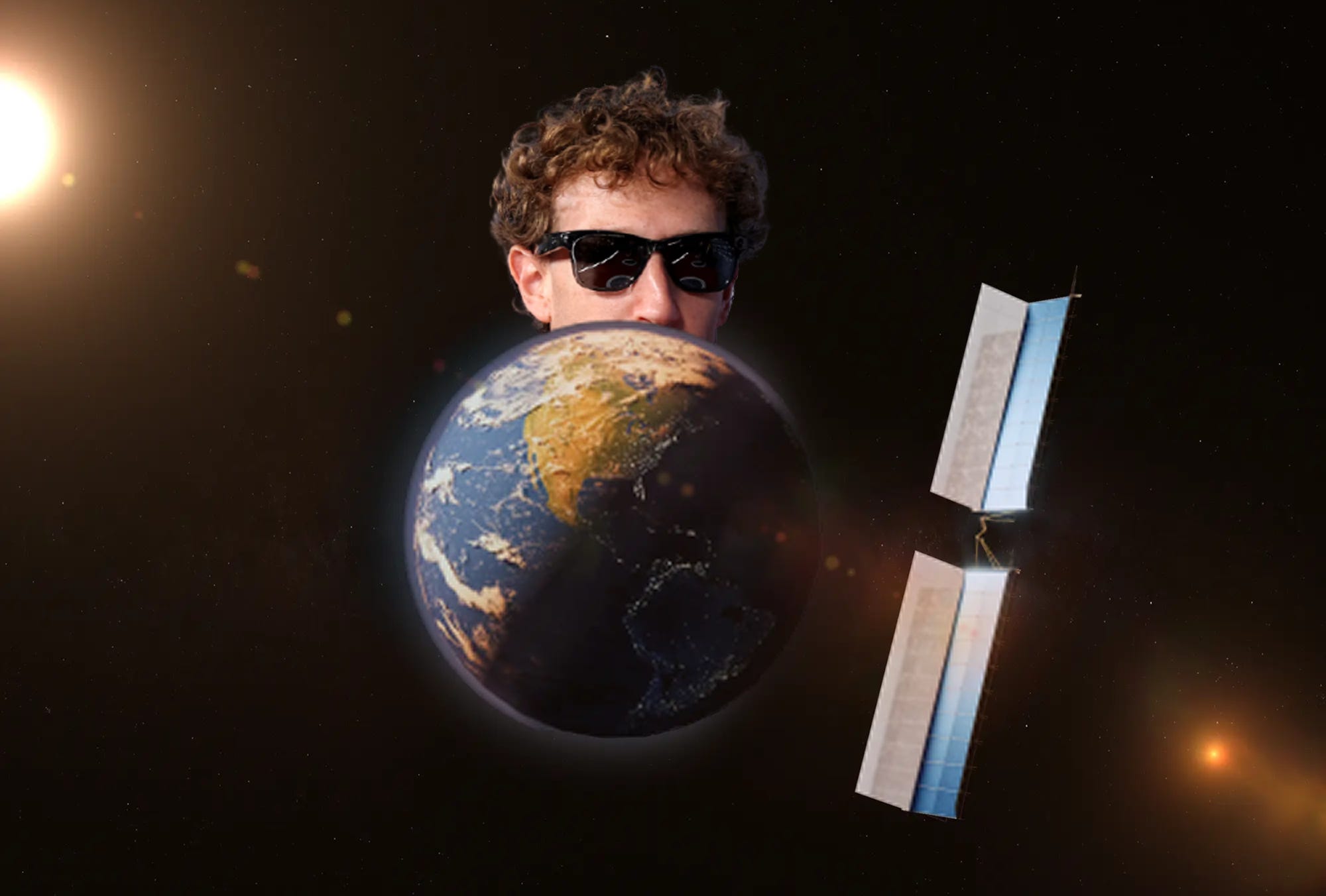
Space lasers, baby. On Monday, Meta announced that “it signed the first capacity reservation agreement with Overview to receive up to 1 gigawatt of power from the company’s spacecraft.” Overview is Overview Energy, whose founder Marc Berte I spoke with just last week.
The company’s game plan is to put satellites in geosynchronous orbit that beam power to existing solar farms on Earth, so electricity can be delivered wherever it’s most needed without being tied to one location. Unlike Reflect Orbital, which plans to send mirrors up to space to reflect the sunlight back to earth’s solar panels directly, Overview plans to capture the solar energy in space, convert it to laser light, then beam those photons down to existing solar panels, which turn them back into electricity.
I understand that it sounds insane and sci-fi, but I came away from my call with Marc thinking it’s much more near-term than I expected, and Meta’s deal supports that belief.
To get into the nitty gritty, read our friend Rob L'Heureux’s Making Space Lasers Boring in Arena Magazine.
Zuck future so bright he gotta wear shades1.
(3) Rainmaker Proves It Can Make it Rain
Augustus Doricko
I’ve probably covered Rainmaker in the Dose more than any other non-portfolio company, because being able to control the elements for humanity’s benefit is awesome, and because they keep putting out good news with good videos.
This time, CEO Augustus Doricko announced that “Rainmaker is the first company in history to routinely, unambiguously, modify the weather. Last quarter, we produced >143MM gallons of unambiguously man-made precipitation.”
While others have made it rain, Rainmaker is the first to use radar and satellite data to validate that they were actually responsible for the rain, and just how much rain they produced.
Make it rain. Count the drops.
(3b) Skydio Commits $3.5 Billion to U.S. Drone Manufacturing Expansion
Rainmaker makes it rain by sending drones into clouds. Zipline uses drones for delivery. The military uses drones. Law enforcement uses drones. Infrastructure owners use drones. Drones are everywhere, most of them are made in China, and there will be a whole lot more of them in the future than there are now.
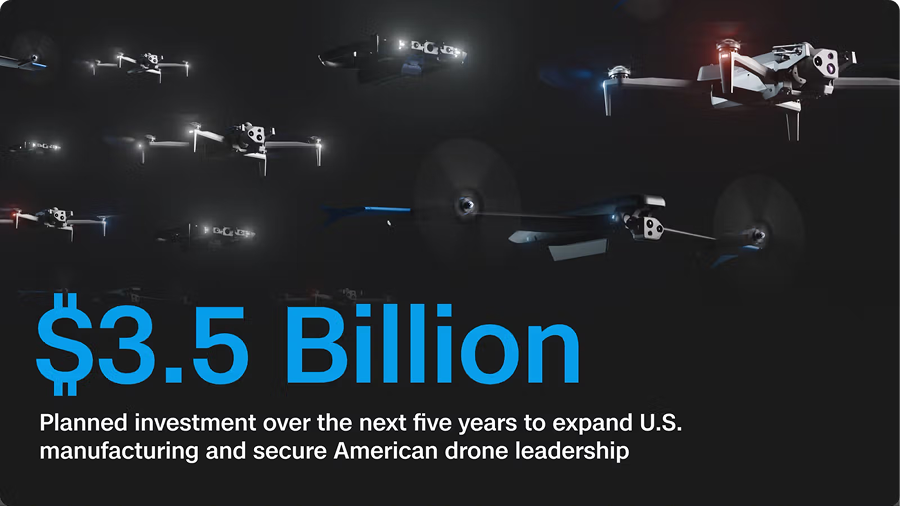
To that end, Skydio announced that it plans to invest $3.5B over the next five years to expand American drone manufacturing, including spending over $1 billion with U.S. suppliers. The headline program, SkyForge, is a fifth manufacturing facility five times larger than the existing four (Skydio outgrew four facilities in eight years), with select suppliers invited to co-locate inside it.
We’re gonna need a lot of drones. Skydio is the best American bet. My friend Molly O’Shea went to Skydio HQ to see how they do it.
(4) Colossal Announces the De-Extinction of the Bluebuck Antelope
“More than 200 years ago, humans erased an iconic species.”
“They’re yet another example of a species that has gone extinct by interacting with us.”
“We are excited to announce the de-extinction of… Hippotragus Leucophaeus.”
Colossol Biosciences, of Wooly Mammoth and Direwolf fame, plans to bring back the Bluebuck. Just because we can absolutely means we should.
(5) How American Dads Became the Parents Their Fathers Never Were
Derek Thompson and Aziz Sunderji
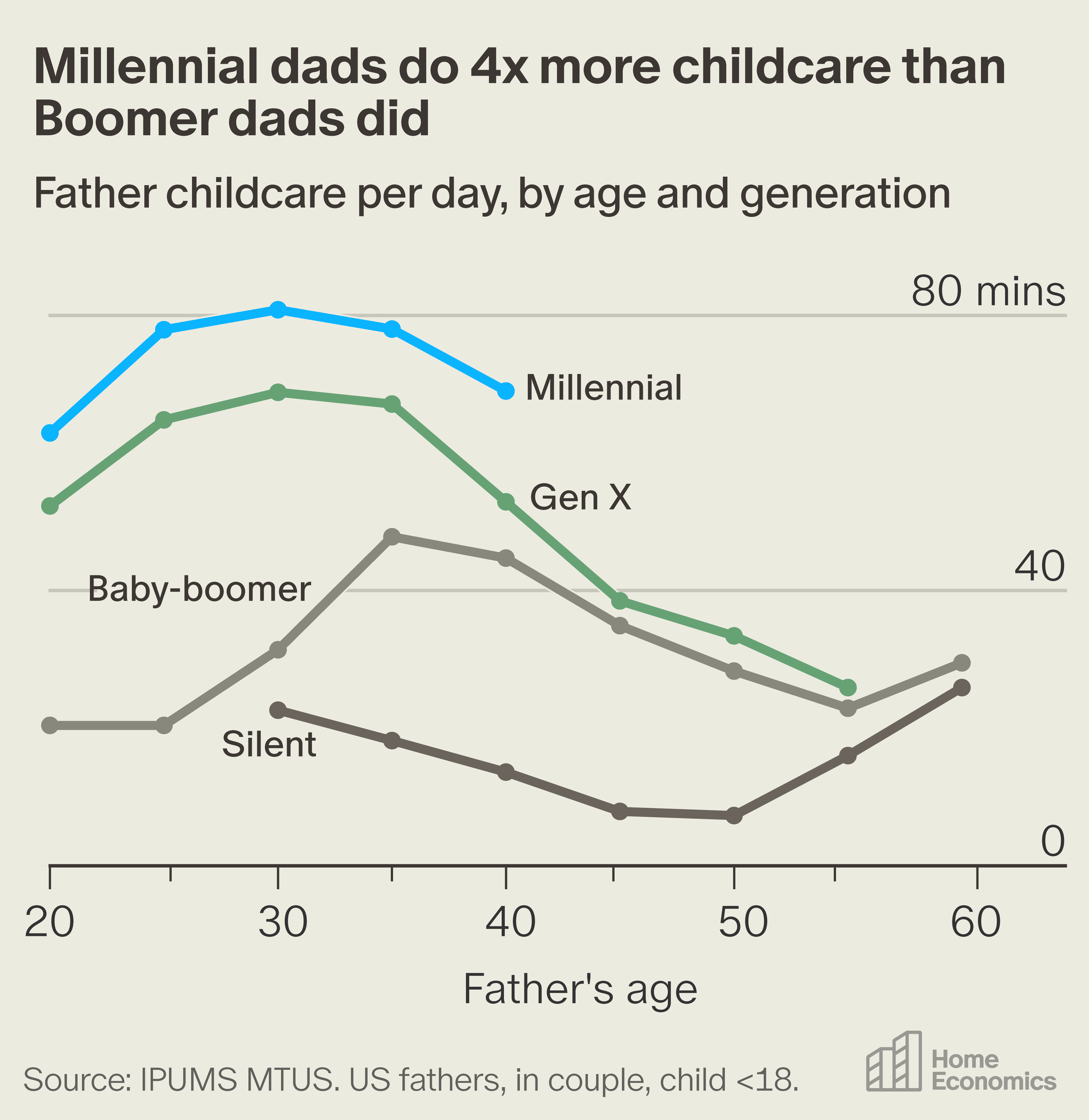
What’s the point of all of this time-saving and life-extending technology if we can’t use all of that time and life on the important stuff. Luckily, we (dads) seem to be, according to Derek Thompson and Aziz Sunderji, who ran the time-use data on three generations of American dads.
In 1965, the typical married father spent ~30 minutes a day actively engaged with his kids. Today, Millennial dads spend more than 80. That's roughly triple the Boomer baseline and nearly quadruple the Silent Generation. Mothers' time with kids went up, too. The new childcare hours are not coming out of the mom column.
The piece walks through four explanations, none of which fully covers it on its own. The mass entry of women into the workforce is the obvious one but the timing doesn't quite work. Dads also seem to like it. There’s Rameys' "Rug Rat Race," where intensive parenting is partly status competition, partly anxiety about a kid's path through college and the labor market. And as Marc Dunkelman has written, the decline of community and weak ties in America has pushed leisure indoors, which means dads are physically around more, which means they're parenting more.
One that they don’t really talk about but feels right is technology. I got to spend way more of Dev and Maya’s first few years with them because I was able to work from home thanks to Substack and Zoom. While it’s bad that we’re distracted by phones when we’re with our kids, phones also mean that we’re still reachable at the playground.
The essay’s subtitle captures my own experience pretty well: “The new American dad is more present and more exhausted—but also, more satisfied with life.” Also this: “new parents often have short-term loss of brain volume.” Also this:
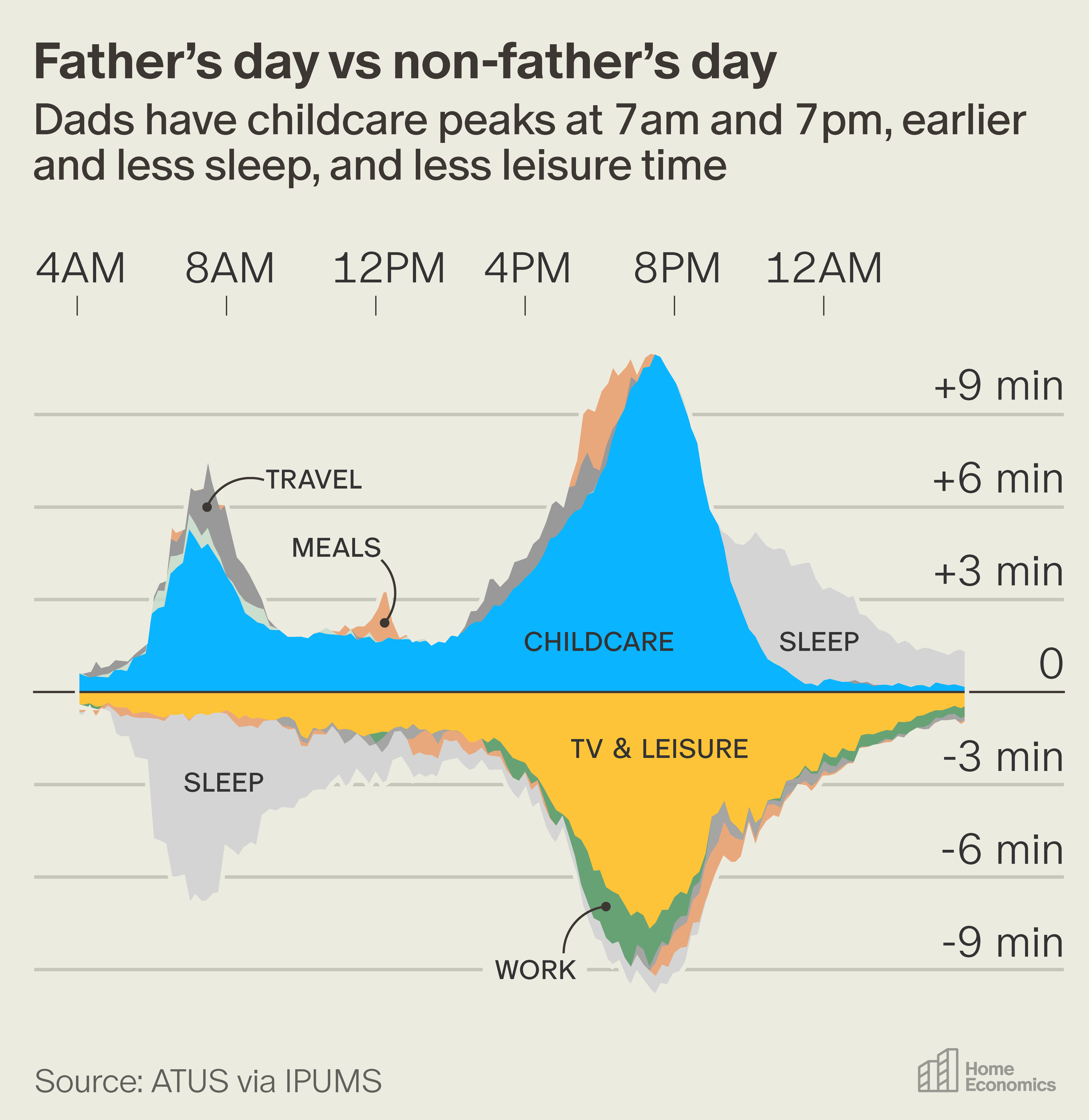
I wouldn’t trade it for anything in the world.
EXTRA DOSE: Science Breakthroughs (including a 5-in-1 GLP-1 successor), Earth AI, PTJ, Nicholas Thompson