

Hey friends 👋 ,
Happy Saturday and welcome to another Weekend Edition of the Weekly Dose.
Sending today because yesterday, we published an in-depth primer on the state of robotics from Evan Beard’s perspective as our first co-written essay for not boring world. A world full of robots doing all of the work that we don’t want to do, and a lot of stuff that we can’t even imagine, is as optimistic as it gets.

Grab a big cup of coffee, cozy up on the couch, and read about MedGemma & MRIs, Claude, Tesla’s new lithium refinery, Conceivable, nuclear and hotels on the moon, and the a16z pod.
Let’s get to it.
Today’s Weekly Dose is brought to you by… Framer

Framer gives designers superpowers.
Framer is the design-first, no-code website builder that lets anyone ship a production-ready site in minutes. Whether you’re starting with a template or a blank canvas, Framer gives you total creative control with no coding required. Add animations, localize with one click, and collaborate in real-time with your whole team. You can even A/B test and track clicks with built-in analytics.
Ready to build a site that looks hand-coded without hiring a developer?
Launch a site for free on Framer dot com. Use NOTBORING for a free month on Framer Pro.
(1) Google Releases MedGemma 1.5 for Medical Imaging
Daniel Golden and Fereshteh Mahvar, Google Research
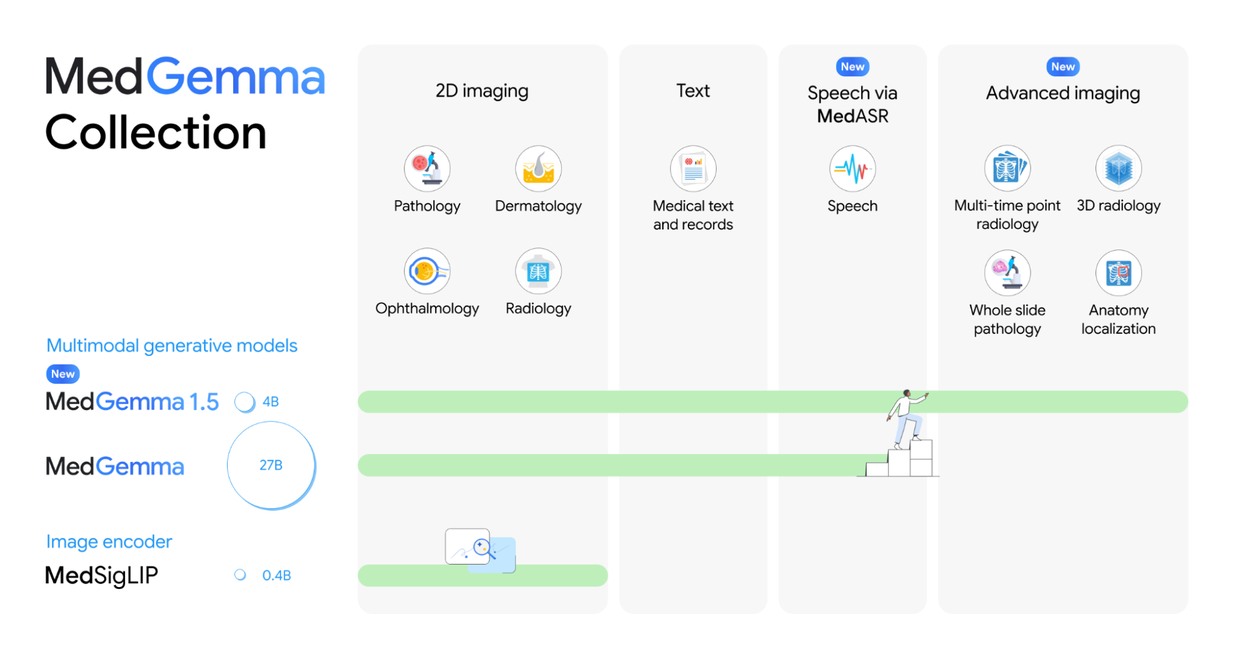
In this house, we stan Google DeepMind, and Google DeepMind rewarding us.
This week, the company rolled out its MedGemma 1.5 model for healthcare developers. Per CEO Sundar Pichai, “The new 4B model enables developers to build applications that natively interpret full 3D scans (CTs, MRIs) with high efficiency - a first, we believe, for an open medical generalist model. MedGemma 1.5 also pairs well with MedASR, our speech-to-text model fine-tuned for highly accurate medical dictation.”
What it means is that it will be easier for developers to build excellent software that makes it easier for medical professionals to make us all healthier. The challenge with infrastructure like this, though, is that it’s not tangible. It’s hard to know what that means until developers actually go out and build with it.
So in the meantime, Shopify CEO Tobi Lutke gave us all a little preview with the html-based MRI scan viewer that he vibecoded with Claude to get around old, locked down software in order to access information on … himself.


To be clear, this is front-end development. But combine better, easy-to-build frontends with better models to interpret the scans themselves and it’s going to get a whole lot easier and less frustrating to understand, and treat, our bodies.
Speaking of vibe coding things with Claude, I’m going to go ahead and do a Weekly Dose first: I’m just recommending that this weekend, you take some time to play with Claude. This release is just an excuse to talk about it. I haven’t used Cowork yet, I don’t use Claude Code, and I’ve found that I haven’t needed to, because there’s so much you can do in just good ol’ fashioned Claude.
Claude Code is getting a lot of hype as people came back from holiday downtime having had time to really play with it for the first time. The hype is deserved. It’s so much fun.
After seeing a tweet about a speedreader, I just… built a speedreader for my a16z essay.

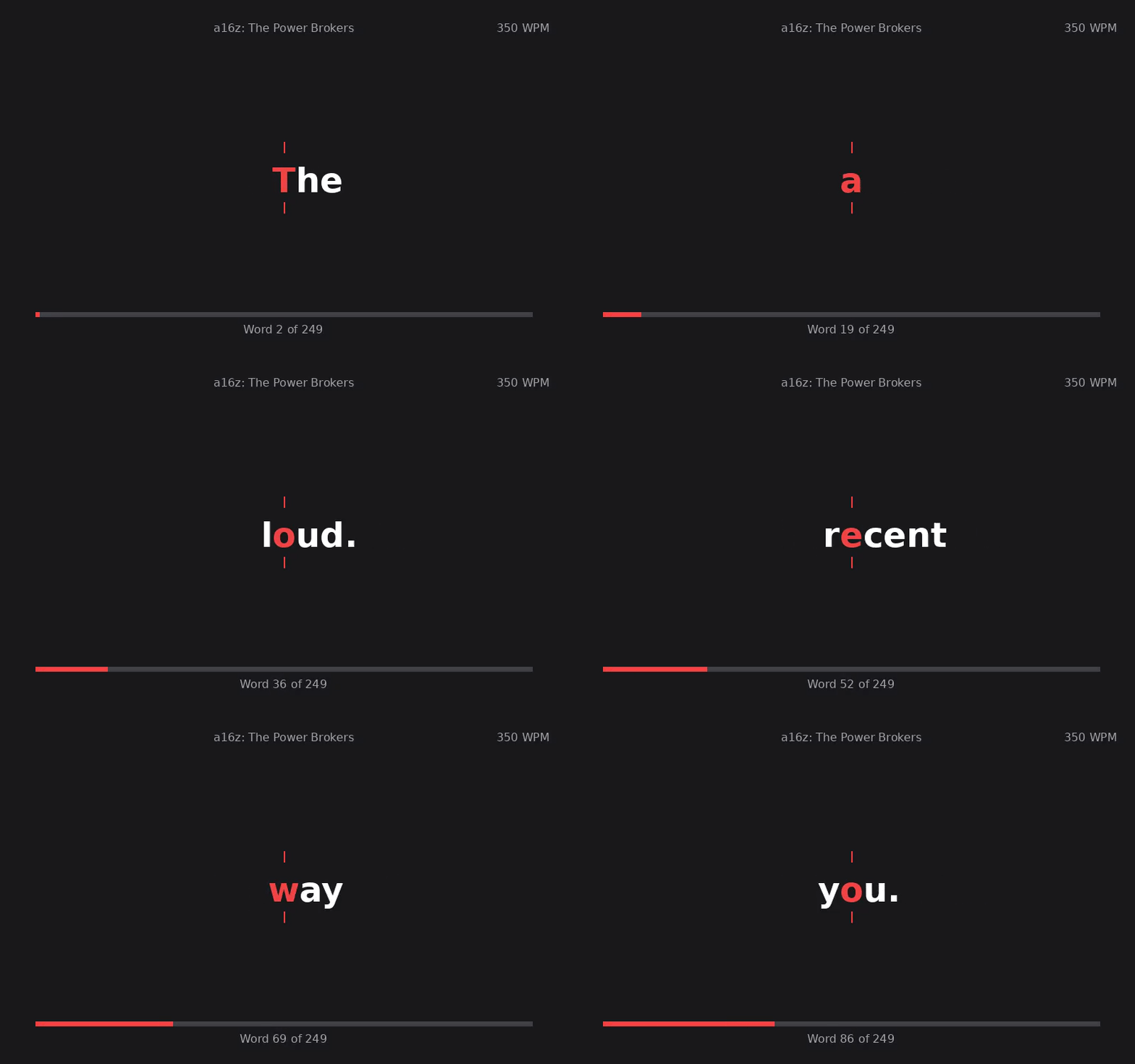

It feels like the first time that the thing we’ve been saying for a long time, that the gap between idea and outcome will disappear, is coming true. Personally, I feel bottlenecked on ideas. So what I’ve started doing is dumping my essays in and asking Claude what we can build on top of them. For yesterday’s piece on the Small Step v. Giant Leap approach to robotics, it made me a game.
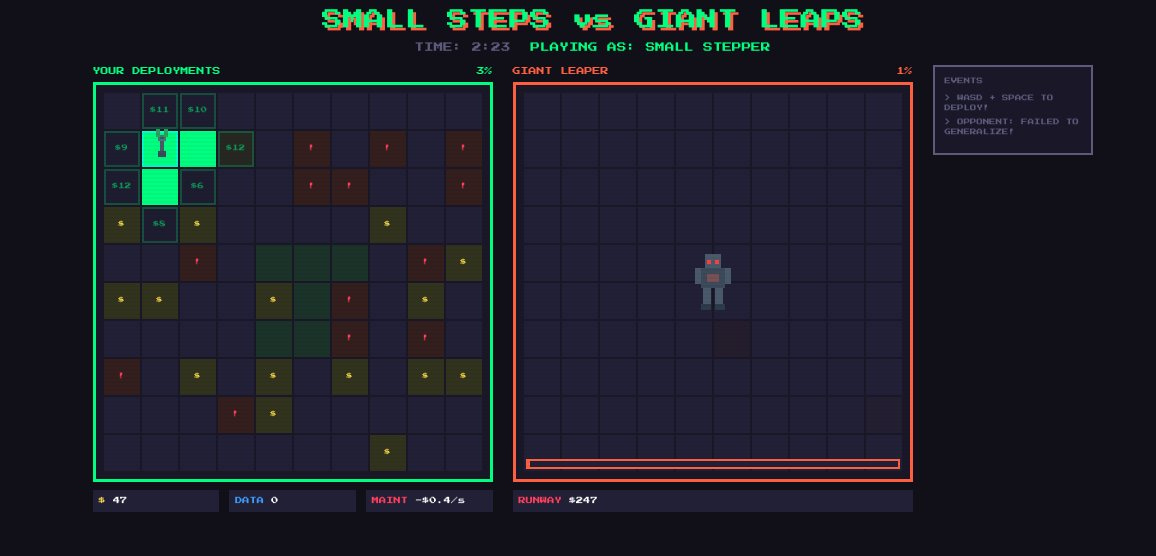
I wanted to embed that game in my essay, but Substack doesn’t allow embeds, so I asked it to make me an editor that uses embeds, which it did in a prompt.
This stuff isn’t fully production-ready in the hands of a novice like me, but that’s probably only because I haven’t spent enough time on it. For example, if want to turn your side project into an actual mobile app, you can now do just that in Replit, after they announced a way to publish your apps to the app store right from Replit. Need to play around with that this weekend.
I don’t know how useful any of this stuff is yet or will be for me, but it’s a ton of fun.
(3) Tesla’s Lithium Refinery is Now Operational
There’s vertical integration, and then there’s VERTICAL INTEGRATION.
Electric vehicles need batteries, and batteries need lithium. We have plenty of lithium in the US, but it’s bottlenecked on refining. So that wild man just went out and built his own lithium refinery outside of Corpus Christi, Texas. The refinery went from groundbreaking to live in three years versus the typical decade, and is now the largest lithium refinery in the United States.
One of the challenges with refining here is that traditional processes are so environmentally unfriendly that it’s hard to get them approved. Other countries with less strict regulations don’t have that problem. But the point of technology is to do more with less, and better.
Traditional lithium refining often involves acid roasting that produces hazardous byproducts like sodium sulfate. Tesla's process creates a benign co-product, essentially sand and limestone that can be used in construction materials. The facility processes raw spodumene ore directly into battery-grade lithium hydroxide on site, bypassing intermediate refining steps commonly used elsewhere in the industry.
Musk has long called lithium refining “a license to print money,” because while lithium ore is relatively abundant, the refining capacity to turn it into battery-grade lithium hydroxide was a major bottleneck in the electric vehicle industry.
Now, Tesla is both solving its own supply chain problem and turning on the money printer by bringing that capacity onshore. Vertical integration, baby! If the bottleneck is refining, build the refinery.
(4) The Startup Making Human Embryos With AI-Assisted Robots
Sara Frier for Bloomberg
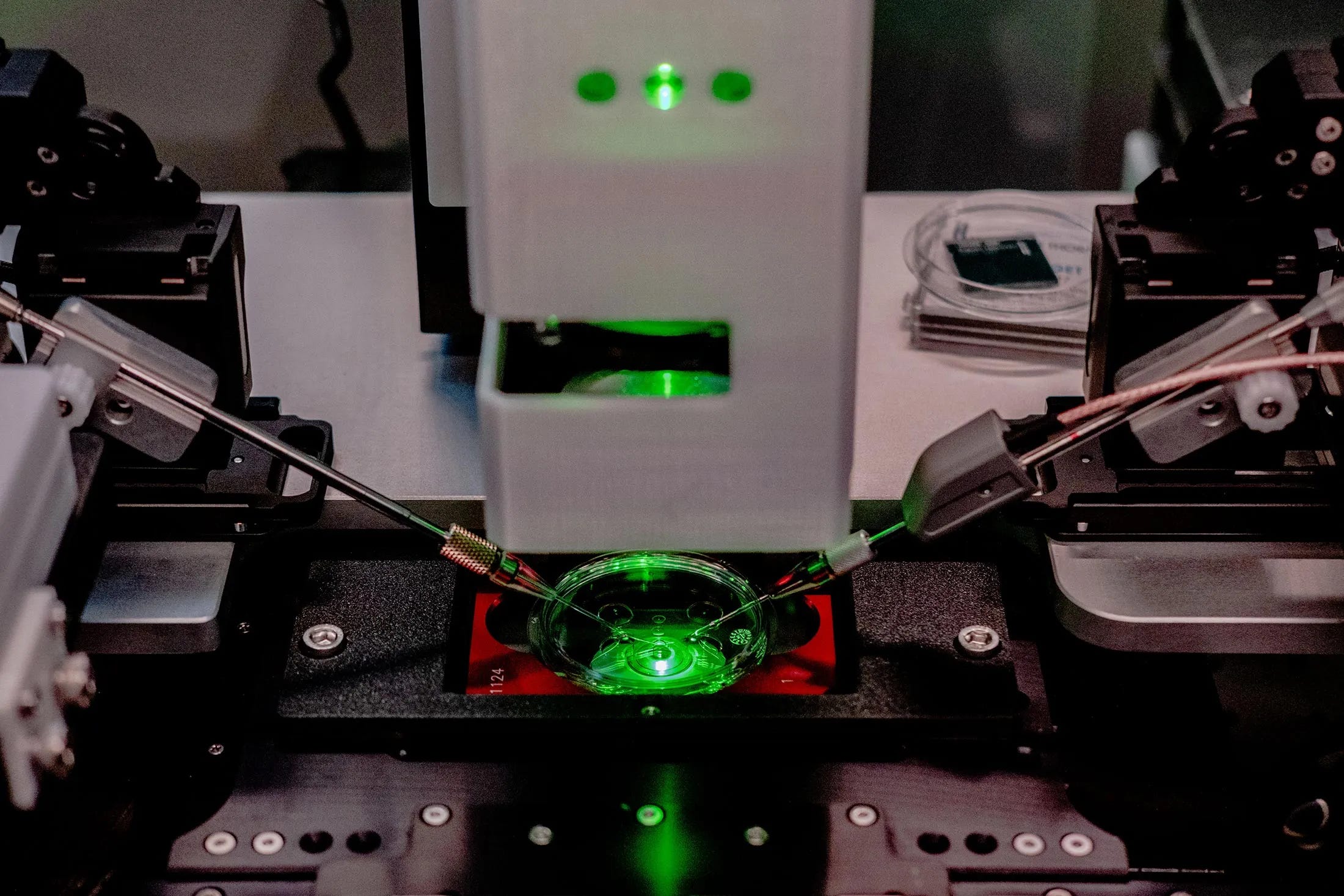
One in six couples struggle to conceive naturally, and as a result, I have a lot of friends who have gone through IVF to have a baby. The process is a miracle, and there is a lot of room for improvement. According to the CDC, IVF produces live births only 37.5% of the time.
To improve IVF, Conceivable Life Sciences has built AURA, a 17-foot robotic assembly line that can perform every step of IVF embryo creation outside the human body, from separating sperm to fertilizing eggs to flash-freezing embryos. The New York-based startup (we love to see it 🗽) has helped bring 19 babies into the world so far, including one born in September to Acme Capital partner Aike Ho and her wife, who participated in the clinical trial after Ho wrote Conceivable’s first check.
“People should be as excited about this as they were about the moon landing,” Ho told Bloomberg.
The pitch is straightforward: IVF succeeds only 37.5% of the time partly because it depends on individual embryologists who vary in training, technique, and how much coffee they’ve had. AURA makes 30 micro-adjustments per second with thousandth-of-a-millimeter precision, uses AI adapted from Baidu’s computer vision to find eggs in follicular fluid, and can plunge embryos into liquid nitrogen so fast it’s invisible to the human eye—reducing ice crystal formation tenfold.
The founders’ vision is to create “superlabs” where a single embryologist and two technicians oversee thousands of embryo creations daily, dramatically expanding access while cutting costs. They’ve raised $70 million and plan to launch in the US this year.
Sadly, one founder, Joshua Abram, died of cancer weeks before the first American baby was born. Before he died, he told his partner he wanted to see Conceivable responsible for 65% of all IVF births.
Circle of life.
(5) A Big Week for Lunar Development
DOE, NASA, and GRU

The DOE and NASA are teaming up to develop a nuclear reactor on the moon by 2030.
Per the DOE, “DOE and NASA anticipate deploying a fission surface power system capable of producing safe, efficient, and plentiful electrical power that will be able to operate for years without the need to refuel. The deployment of a lunar surface reactor will enable future sustained lunar missions by providing continuous and abundant power, regardless of sunlight or temperature.”
If this had happened a couple years ago, I would have been both amazed and bummed that we’re getting new reactors on the moon before we get them in the US. Now, we’re getting both. Meta signed an agreement for 6.6 GW to power its data centers by 2035. What a time to be alive. The only question now is who’s going to build it. Seems like it might be good practice for Radiant on the way to Mars reactors.
And speaking of sci-fi projects on the moon, a startup called GRU is starting to accept reservations for its moon hotel, which is scheduled to open in 2032. Slots cost anywhere from $250k to $1 million, so start saving.
BONUS: I Got to Interview Marc Andreessen and Ben Horowitz
There aren’t a lot of people who can out-optimism me. Marc and Ben are two of them.
After my deep dive on the firm, I had the chance to interview Marc and Ben together this week. We go wide, but I particularly enjoyed talking about how and why new technology companies can grow to become 10x (or 1,000x) larger than the incumbents they replace.
Enjoy!
Have a great rest of your weekend y’all.
Thanks to Aman and Sehaj for all the help. We’ll be back in your inbox next week.
Thanks for reading,
Packy
I do like your intro, "A world full of robots doing all of the work that we don’t want to do, and a lot of stuff that we can’t even imagine, is as optimistic as it gets."