

Hi friends 👋,
Happy Friday! It’s quasi-warm in New York City, America won two golds in ice hockey (sorry, Sean, Dan didn’t have anything funny to say but we’re pumped), and the good guys just keep on doing things that make us optimistic.
Let’s get to it.
(1) Form Gets $1 Billion Google Order for 30 Gigawatt-Hour Battery System
Steve Levine for The Information
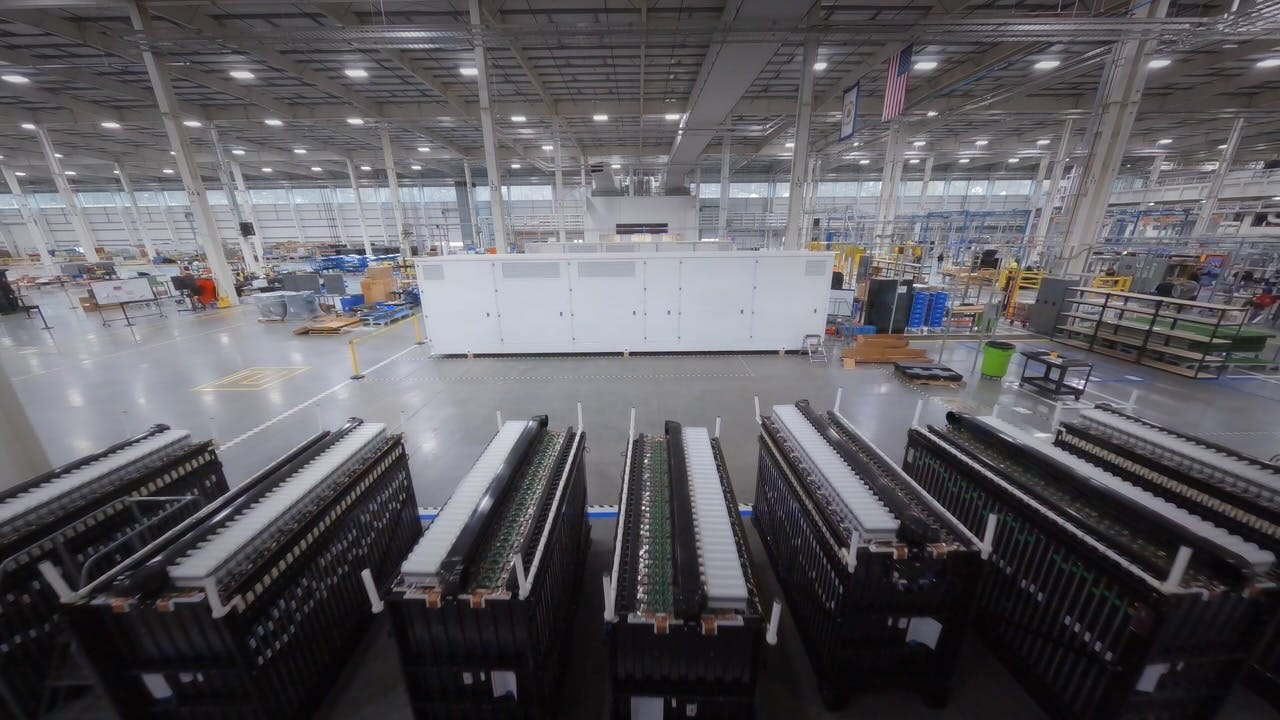
The Decade of the Battery is charging ahead, now with American batteries.
Earlier this week, Google announced a deal with Xcel Energy to provide 1.9 GW of wind, solar, and battery power for a planned data center in Pine Island, Minnesota, part of a push for hyperscalers to Bring Your Own Electricity (BYOE). Wind and solar are clean, and cheap when the sun shines and the wind blows, but the sun doesn’t always shine, and the wind doesn’t always blow, so the deal includes $1 billion for a nine-year-old startup Form Energy to provide backup.
Form will be providing two kinds of batteries: standard lithium-ion batteries for instant surges of power, and iron-air batteries for longer-term backup.
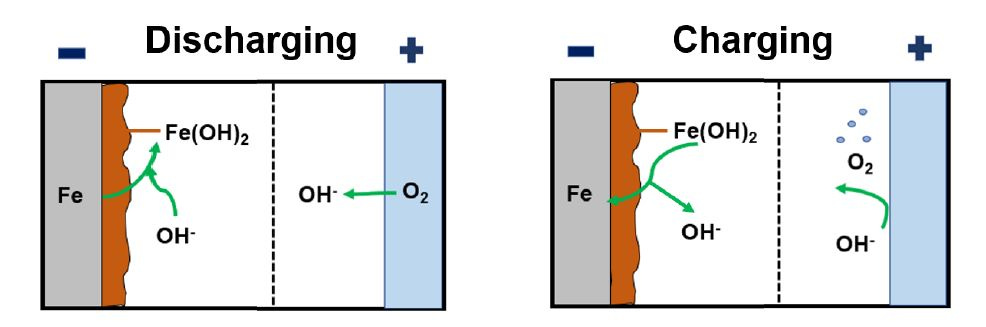
Iron-air batteries work through a process that’s like reverse rusting. To discharge, the battery breathes in oxygen from the air. Iron metal at the anode reacts with that oxygen and water-based electrolyte to form iron rust (iron hydroxide/iron oxide). This oxidation reaction releases electrons, which flow through an external circuit as electricity. To charge and store electricity, you apply electricity (say, from solar or wind), and the process reverses. The rust is electrochemically reduced back into metallic iron, and oxygen is released back into the air. The iron is “de-rusted” and ready to discharge again.
Iron-air batteries are low power density and slow response, but extraordinarily cheap on a per-kWh basis, roughly 10% of the cost of lithium-ion. They’re perfect for longer-term storage, up to 100 hours, for multi-day lulls in sun and wind. These lulls are whimsically named “Dunkelflaute” events.
Form will provide a 300 MW iron-air battery system for the project, and the batteries can store 100 hours of power, making it a 30 GW-hr system. It will be the biggest battery system by energy capacity in the world when delivered.
This is good news because we love batteries here at Not Boring, and because it’s a rare win for a western battery company in a category that’s been dominated by China. That also means good US jobs; the batteries for this project will be manufactured at Form Factory 1 in Weirton, West Virginia, on the site of a historic former steel mill.
So yeah, maybe AI is going to take all of our white-collar jobs (kidding, we’re on Team Thompson), but powering all that AI is going to create new ones, too.
(2) Proxima Fusion Signs MoU to Build Stellarator Fusion Power Plant

Proxima Fusion, a German startup out of the Max Planck Institute, signed an MoU with the Free State of Bavaria, RWE, and Max Planck Institute for Plasma Physics (IPP) to put the world’s first commercial stellarator fusion power plant on the grid in Europe.
It will need €2 billion to build a demonstration facility, Alpha, prior to the commercial plant, Stellaris, €400 million of which will come from Bavaria and up to €1.2 billion of which may come from the German government. It’s an expensive way to say “Es tut mir Leid” for shutting down all of the country’s nuclear power in favor of coal, but a very cool way to get German energy back on track.
Of course, it’s just an MoU. The plant still needs to be built, and then there’s the tricky matter of achieving Q>1 and, eventually, Q> whatever it needs to get to to be economically viable, but we love the stellarator.
Stellarators are a type of fusion reactor. In The Fusion Race, we wrote:
Designed by Lyman Spitzer at the Princeton Plasma Physics Laboratory, Stellarators are devices designed to confine hot plasma within magnetic fields in a twisted, torus-shaped configuration to sustain nuclear fusion reactions.
Stellarators, while promising, were difficult to design and build due to their complex magnetic field configurations.
But that was the 1950s! We have better technology today. On Age of Miracles, Julia and I interviewed Proxima CEO Francesco Sciortino, who told us something that’s stuck with us: we made Tokamaks first not because they were best, but because they were the easiest to design and manufacture. Stellarators, with their weird twists, were harder to design and manufacture, but closer to the platonic ideal of a fusion generator. Now, with better software and manufacturing capabilities, we can make reactors closer to the platonic idea.
Proxima has a long way to go before it’s putting electrons on the grid, but we’re happy to see progress towards that goal. Gut gemacht, Germany.
(3) Magical Month for Psilocybin

Psilocybin, the psychoactive compound in magic mushrooms, has been classified as Schedule I drug under the Controlled Substances Act since 1970. The classification means that it has “no accepted medical use and a high potential for abuse.”
That “no accepted medical use” part is coming under intense pressure from reality. Last week, Compass Pathways announced that it had achieved its primary endpoint in a second Phase 3 trial evaluating COMP360 psilocybin for treatment-resistant depression. Two doses of COMP360 25mg demonstrated a highly statistically significant reduction in depression symptoms versus control (p<0.001, -3.8 point MADRS difference). This makes Compass 3-for-3 on trials. The company plans to meet with the FDA to discuss a rolling approval submission between October and December 2026, which would make COMP360 the first “classic” psychedelic cleared in the U.S.
The week prior, a Johns Hopkins pilot study of 20 adults with well-documented post-treatment Lyme disease found that psilocybin, given with psychological support, produced significant and lasting reductions in multi-system symptom burden, including improved mood, fatigue, sleep, pain, and quality of life, that persisted for up to six months. The numbers are striking: general symptom scores dropped roughly 40% and mental/physical quality of life scores rose about 13% from baseline, with benefits maintained through the six-month follow-up. The durability is noteworthy, because a placebo would typically diminish over six months.
The Lyme study is especially interesting because it extends the psilocybin evidence base beyond the depression/anxiety lane into a chronic neuroimmunological condition where there are essentially no accepted treatments. If psilocybin is doing something meaningful for post-treatment Lyme, it starts to suggest mechanisms (anti-inflammatory, neural connectivity remodeling) that go well beyond the “it helps you process emotions in therapy” framing.
From a pharma business perspective, one of the biggest challenges with psilocybin is that it just works. There’s no opportunity to keep patients on (and paying for) meds for the rest of their lives like there is with SSRIs. That’s all the more reason we should be taking psilocybin very seriously. If this same logic applies to other conditions, like Lyme, it could be a major win for humanity.
A miracle drug like GLP-1 whose side effects include euphoria and spiritual experiences instead of muscle loss and upset stomach would be magical indeed.
(4) Stripe’s 2025 Annual Letter
Patrick and John Collison for Stripe

Stripe published its annual letter this week. It’s one of the best pieces of economic writing you’ll read all year, because Stripe has some of the world’s best data on the internet economy, and because those Irishmen can write.
Last week, in Power in the Age of Intelligence, I made the case that tech-native category leaders like Stripe are more valuable because they’re going to eat more of their categories than second-best. Stripe is eating. They shared that they did $1.9 trillion in total payment volume in 2025, up 34% year-over-year, and that roughly 1.6% of global GDP is flowing through the company's pipes.
More interesting is the data they have on companies using Stripe. Their 2025 cohort of new businesses is growing 50% faster than the 2024 cohort. The number of companies hitting $10 million ARR within three months of launch doubled. iOS app releases jumped 60% year-over-year in December. GitHub pushes surged 41% between Q3 2024 and Q3 2025. All of their indicators suggest that the pace is accelerating, and the Collisons’ best guess is that it isn’t an anomaly.
The whole letter is worth a read, but three sections stand out.
First, their framework for “agentic commerce” lays out five levels, from agents that just fill out checkout forms for you all the way up to agents that anticipate what you need and buy it before you ask. They’re honest that we’re hovering between levels 1 and 2, but the comparison to the mid-90s — when HTTP, HTML, and DNS were being hashed out — feels apt.
Second, crypto is happening, even if crypto prices aren’t. Bitcoin is down 50% from its October peak, but stablecoin payments volume doubled to around $400 billion last year, with 60% estimated to be B2B payments. Bridge, the Not Boring Capital portfolio company acquired by Stripe, quadrupled its volume. Stripe is betting on stablecoin payments infrastructure hard with Tempo, a built-for-payments blockchain they’re building with Paradigm. Visa, Nubank, Shopify, and even Klarna (whose CEO was once a self-proclaimed crypto skeptic) are already testing it. Mainnet is launching soon.
Third, the letter closes with what might be its most important idea: we live in a “Republic of Permissions.” Technologies succeed or fail not just on their merits but on whether the web of regulators, committees, and courts lets them through. The Collisons cite Joel Mokyr’s Nobel-winning work on how culture, not just capital or technology, drives progress. They argue that AI could transform drug discovery, nuclear could deliver energy abundance, and drones could slash logistics costs, but only if we don’t let “a slurry of local ordinances harden into a blockade.” Hear hear.
It’s a letter about payments that’s really a letter about whether civilization can keep up with its own tools, co-written by a guy whose website has the canonical list of projects from a time when we were able to build fast. They think we can.
“We’re reminded of the phenomenon of falling into a large black hole… We write this letter at what may well turn out to be the advent of a different and hopefully much more beneficent singularity. While much around us in 2026 feels similar to prior years, it is also clear that the next decade will look very different to those just gone by.”
(5) Vitamin B2 and B3 nutrigenomics reveals a therapy for NAXD disease
Arc Institute in Cell

Pulling one of the most interesting entries from Ulkar Aghayeva’s Scientific Breakthroughs this week above the paywall. Here’s Ulkar on a fresh finding out of Arc Institute:
It may seem that vitamin biology has been figured out decades ago (for reference, all 13 classical vitamins were discovered by 1948). But this paper shows that there’s still a lot of unexplored territory in nutritional genomics.
Instead of starting out with a target disease and trying to find a drug that treats it, they chose the well-known vitamins, B2 and B3, and did a genome-wise CRISPR screen in K562 cancer cells to identify genetic diseases responsive to vitamin supplementation. NAXD, a repair enzyme essential in redox biology, emerged as the top hit for vitamin B3. Mutations in NADX are known to be lethal in early childhood. The team generated knockout mice that showed very similar disease profile to humans, and adding vitamin B3 to their food from birth increased their lifespan more than 40-fold.
How many other diseases are out there that could be so easily cured with various vitamin supplementations?
Additional sources: Arc Institute blogpost; twitter thread
EXTRA DOSE:
Scientific Breakthroughs from Ulkar
Jeremy Stern on Shyam Shankar
Alex Konrad on William Hockey
Mario joins Hummingbird