
Hi friends 👋,
Happy Friday and welcome back to our 178th Weekly Dose of Optimism!
This is one of the most jam-packed doses in recent memory. We had seven Extra Dose stories… before rumors emerged that SpaceX and xAI (and/or Tesla) might be merging.
We’re already way over the length limit, so…
Let’s get to it.
Today’s Weekly Dose is brought to you by… not boring world
For more not boring, including all of the stories below the fold, essays co-written with experts, and chats, join our growing community of not boring world members:
Neuralink

Twenty-one people worldwide now have brain chips in their heads, controlling computers with their thoughts. Neuralink’s first product, Telepathy, “aims to enable people with paralysis to directly control computers, phones, and robotic limbs using their thoughts alone.”
That 21 number alone is remarkable. We went from Noland Arbaugh receiving the first implant in January 2024 to over twenty “Neuralnauts” enrolled in trials across the US and Canada in just two years. Several participants have already exceeded the information transfer rate of an able-bodied person using a mouse, hitting over 10 bits per second with their thoughts alone.
But the human stories are what make this real. Noland, patient one, is back in school pursuing a degree in neuroscience. Sebastian, a 23-year-old medical student, uses his implant up to 17 hours a day to study for exams. Audrey, the first female participant, creates intricate digital art and plans to open a physical gallery to showcase her work. People with ALS are typing at 40 words per minute through imagined finger movements, with a goal of reaching conversational speed.
While Telepathy spreads, Elon Musk provided updates on the company’s future products.
Blindsight, which will give those who’ve lost their sight low resolution vision, at first, and higher resolution vision, over time, is ready to begin trials pending regulatory approval. And Musk said that the “next generation Neuralink cybernetic augment with 3x capability” will be ready next year.
For now, Telepathy is a technological miracle, and I highly encourage you to go to the blog post to watch the videos. Imagine what it must be like to be trapped in your body, and then what it must be like to be able to move things with your mind after that. Then remember that we live in an Age of Miracles.
(2) Triple Therapy Eliminates Pancreatic Cancer in Mice
Vasiliki Liaki, Mariano Barbacid, et al. for PNAS
For those who don’t speak Spanish (me), allow me to translate: Spanish scientists led by Dr. Mariano Barbacid have cured pancreatic cancer in mice.
Pancreatic cancer is one of the worst diseases humans face. It kills nearly half a million people globally each year. It has a 13% five-year survival rate (just 8% for the most common form) and is projected to become the second leading cause of cancer death worldwide by 2030. Ninety percent of cases are driven by mutations in a gene called KRAS. The problem: KRAS inhibitors work for a few months, then the tumor rewires around them.
In 1982, a Spanish scientist named Mariano Barbacid isolated the first human oncogene—HRAS—and helped establish that cancer is caused by specific genetic mutations. He’s spent the forty-plus years since then studying the RAS family of genes that includes KRAS. Now, at 75, he may have finally cracked the resistance problem.
The insight is simple: if the tumor can escape one blocked pathway, block three at once. Barbacid’s team at Spain’s National Cancer Research Centre combined daraxonrasib (a KRAS inhibitor), afatinib (an EGFR/HER2 blocker already approved for lung cancer), and SD36 (a protein degrader targeting STAT3). Cut the engine, seal the exits, and disable the backup system, simultaneously.
In mice, the tumors vanished. For over 200 days. No recurrence. The same results held across genetically engineered mouse models and patient-derived tumor xenografts. No significant toxicity.
Barbacid cautions that clinical trials in humans are still years away, requiring funding and regulatory approval. Daraxonrasib alone could be approved later this year. But the principle, that combination therapy designed around resistance mechanisms can achieve durable remission in one of oncology’s most brutal cancers, is now proven in animals.
The man who discovered the first human oncogene may have also discovered how to defeat its most vicious descendant.
(3) AlphaGenome: DeepMind Cracks DNA's "Dark Matter"
Žiga Avsec et al. for Nature / Google DeepMind
Google DeepMind, folks! We been telling you.
When the Human Genome Project delivered its first draft in 2003, scientists discovered something humbling: only about 2% of our DNA actually codes for proteins. The other 98%, once dismissed as “junk DNA,” was a mystery. Two decades later, we know this non-coding DNA is crucial for regulating gene expression, determining when and where genes turn on and off. We just couldn’t read it.
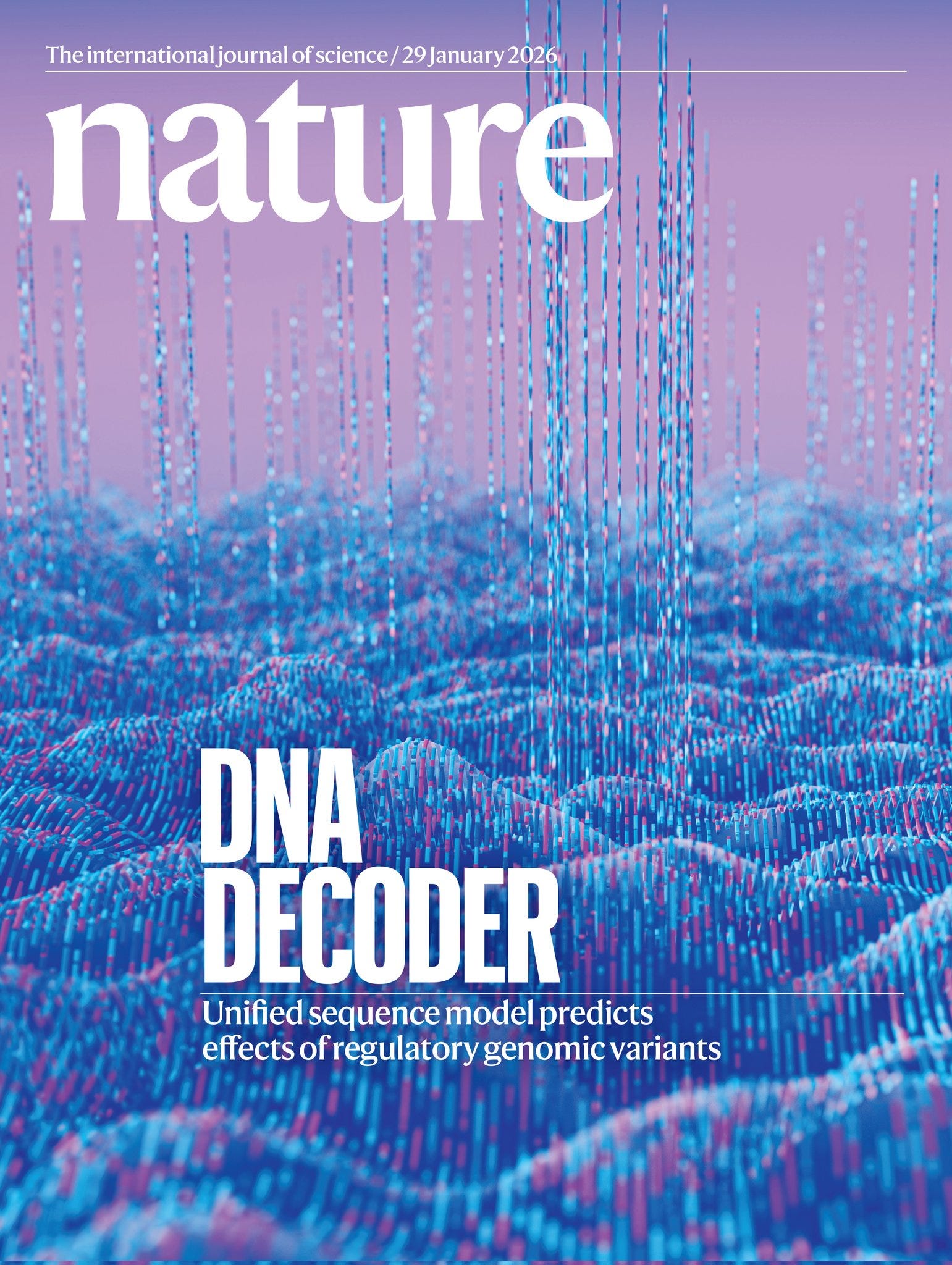
This week, Google DeepMind published AlphaGenome in Nature and open-sourced its code. The model takes in sequences of up to one million DNA letters and predicts how mutations in those stretches affect gene expression, essentially translating the regulatory grammar that governs 98% of our genome.
The technical achievement is significant: AlphaGenome beat or matched the best existing models on 25 of 26 variant effect prediction tasks. It unifies capabilities that previously required specialized tools—splicing prediction, chromatin accessibility, transcription factor binding, gene expression changes—into a single model. Where previous tools had to trade off between sequence length and prediction accuracy, AlphaGenome analyzes million-base-pair stretches at single-nucleotide resolution.
What matters more is what it enables. Nearly 3,000 scientists across 160 countries have already been using the model since DeepMind released a preview API last June. They’re using it to narrow down which genetic variants actually cause disease in conditions from cancer to neurodegeneration. The model won’t tell you if someone will get sick (gene expression is influenced by environmental factors it can’t see) but it can help researchers prioritize which mutations to investigate.
“Ever since the human genome was sequenced, people have been trying to understand the semantics of it,” said Pushmeet Kohli, DeepMind’s VP of Science. “It’s like you have a huge book of three billion characters and something wrong happened in this book. AlphaGenome can be used to say, ‘If you change these words, what would be the effect?’”
AlphaFold gave us the structures of proteins. AlphaMissense predicted which mutations in protein-coding regions cause problems. AlphaGenome completes the trilogy by tackling the regulatory dark matter that connects DNA to everything else. Our bodies are finally becoming machine readable.
(4) Google DeepMind Launches Project Genie, Playable Worlds in a Prompt
Demis Hassabis
No, seriously. Google DeepMind, folks!
Yesterday, the widest-ranging team in AI rolled out playable world models. Through a prompt or an image, you can create virtual worlds and play them with a character of your choosing.
World models are starting to get really, really good. Imagine making anything in the video above even a couple of years ago. It would have taken weeks? months? tens of thousands or millions of dollars? And now, you can do it in a prompt.
A couple years back, Conrad Bastable wrote this excellent piece in defense of monopolies, Monetization & Monopolies: How The Internet You Loved Died, arguing that tech monopolies are good because their outsized profits allowed them to overpay society on the way up with a bunch of not-fully-economically-squeezed products. He uses Google from 2010-2016 as an example of what can go right, and Google 2014-2024 as an example of what happens when the monopoly goes away, but the work they’ve been putting out recently at GDM suggests that it’s still really good to have a ~monopoly money machine that you can throw at trying a bunch of really cool things.
Will these World Models make money over time? Probably. They’ll be useful for games and entertainment and eventually, real world applications. Google will likely make money off of their investment. But in the meantime, you1 can create worlds for your dog or a pink cartoon balloon bunny to explore just because it’s delightful.
(5) The First Human Trial to Reverse Aging Begins
Ryan Cross for Endpoints News

In 2020, David Sinclair’s Harvard lab restored vision in blind mice by partially reprogramming their cells to a younger state. On Monday, the FDA gave Sinclair’s company, Life Biosciences, the green light to try the same thing in humans.
The IND clearance for ER-100 marks the first-ever human clinical trial of partial epigenetic reprogramming, a technique that uses three of the four Yamanaka factors (Oct4, Sox2, and Klf4) to reset age-associated epigenetic markers while keeping cells committed to their original function. By excluding c-Myc, the factor associated with uncontrolled growth, Life Bio aims to thread the needle between rejuvenation and tumor risk that has historically spooked regulators.
The Phase 1 trial will enroll patients with open-angle glaucoma and non-arteritic anterior ischemic optic neuropathy (NAION), diseases where retinal ganglion cells die and can’t regenerate. Sinclair’s lab showed in 2020 that OSK gene therapy could restore vision in aged mice with glaucoma. Now we find out if it works in people.
“Since Shinya Yamanaka first showed that cellular age could be reset, the potential of translating that biology into real medicines has been enormous yet has previously remained largely theoretical,” Life Bio CEO Jerry McLaughlin said. “This IND clearance is a major inflection point for the longevity and aging biology field.”
The eye was a strategic choice. Life Bio knows how to deliver gene therapy there safely, and the impact of restoring vision is immediately measurable. But Chief Scientific Officer Sharon Rosenzweig-Lipson made the broader ambition clear: “We can do it almost anywhere. Whatever age-related diseases are most important to you, those are the ones we’re thinking about.” The company is already developing ER-300 for liver disease.
What makes this different from the $200 billion supplement industry or the parade of failed Alzheimer’s drugs is the mechanism. Life Bio isn’t treating downstream symptoms. They’re attempting what Rosenzweig-Lipson calls a “near total reset,” taking corrupted cellular software and restoring it to factory settings.
Sinclair has been saying for a decade that aging is a disease and that disease is treatable. His lab proved the concept in mice, then monkeys. He’s also a controversial figure, accused by many of being over-promotional and over-extrapolating from animal studies. Now, the FDA is giving him a chance to prove it in humans. As a human, I hope he’s right.
(5a) Silver Linings Puts a Price Tag on Not Dying
Raiany Romanni-Klein, Richard Evans, and Jason DeBacker in silverlinings.bio
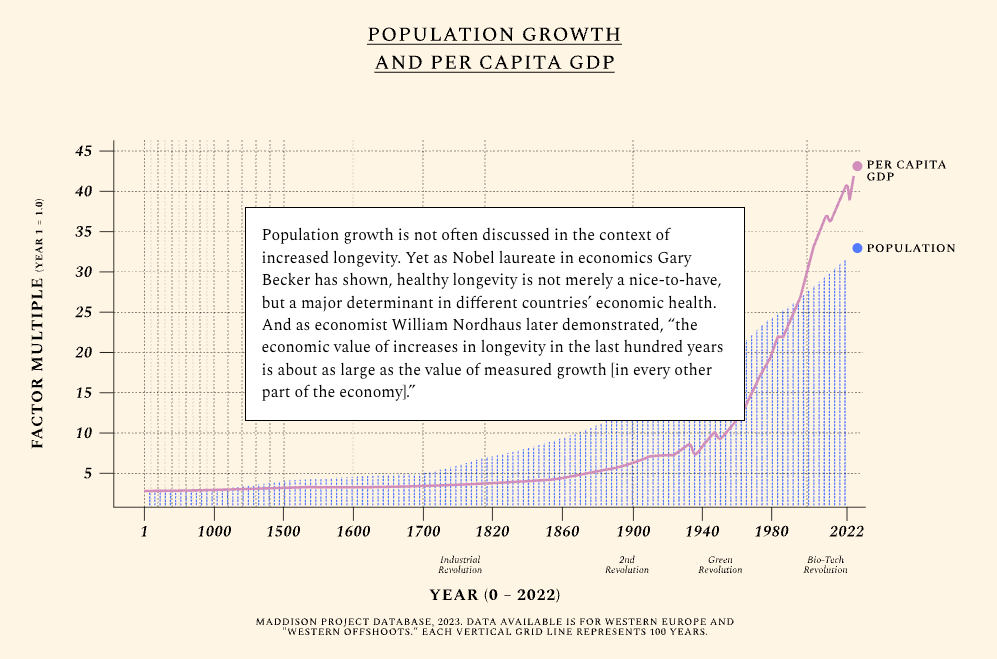
If Sinclair is right, along with the others who are working to defeat aging, the economic benefits will be immense.
On Wednesday, I moderated a panel at Deep Tech New York hosted by AlleyCorp with Gearworks CEO Raquel Schreiber and Superabundance co-author Gale Pooley. In Superabundance, Pooley and his co-author make the case that, contra Ehrlich, resource abundance increases with population. More people + freedom to innovate = abundance.
Normally, we assume that this means more new people. Higher birth rates. But in this beautiful study, Raiany Romanni-Klein, Richard Evans, and JasonDebacker found that extending the healthy and productive lives of those of us already living would dramatically grow the economy.
Slowing brain aging by just one year would add $201 billion annually to U.S. GDP. Delaying biological aging by five years would add $2 trillion per year and nearly 7 million lives saved by 2050. These are two of the outputs of Silver Linings, an open-source project that finally puts hard numbers on what longevity research is worth.
The core insight is almost embarrassingly obvious once you see it, and one that Pooley would agree with: working-age adults are the most valuable resource on Earth. The ceiling of every economy is fixed to the health and number of its working-age population. And yet the U.S. spends just 0.54% of its NIH budget on the biology of aging. Alzheimer's research alone gets 8x more funding, despite producing discouraging results for decades.
Silver Linings simulates different research breakthroughs and shows their ROI:
Slow brain aging by 1 year: $201B/year, $8.9T long-term, 268K lives saved
Slow reproductive aging by 1 year: $9B/year, $9.3T long-term, 391K lives
Double organ supply: $50B/year, $3.2T long-term, 529K lives
Make 41 the new 40: $408B/year, $27T long-term, 1.72M lives
The project maps the market failures that explain why we’re underinvesting: pharma profits more from lengthening unhealthy life than improving overall health; insurers don’t invest in our future health because we can switch plans; disease is easier to measure than wellness. And it proposes solutions like an Innovation Accelerator modeled on In-Q-Tel and Advance Market Commitments for aging biomarkers.
The interactive model lets you input your own assumptions. Skeptical only 30% of the population would benefit? Adjust it. Think breakthroughs will take 20 years? Plug it in. The returns still dwarf any plausible investment.
What I love most is the framing. Evolution optimized humans for reproduction, not longevity. American lobsters get stronger and more fertile with age. Naked-mole rats experience no cognitive decline. The Aldabra giant tortoise lives to 200 without ever going for a run.
We’re not doomed to our current aging trajectory. But we do need to fund the alternative if we want to see it come true.
EXTRA DOSE (for not boring world members)
Multiscale Causality and the Meaning Crisis
A new home robot
Tesla shows off its electric stack
Standard Nuclear raises $140M
Swedish trial shows AI helps detect cancer
Pipedream going live in Austin
Christian joins a16z AD