

Hi friends 👋 ,
Happy Tuesday!
A few weeks ago, a longtime not boring reader and one of my smartest friends, someone I go to with questions on everything from energy to robotics, told me that he was going to China. Over the next few months, he planned to meet with energy, AI, and hardware companies and develop his China Fingerspitzengefühl.
Would I be interested in sharing what he learns in real-time with not boring’s readers? Incredibly easy yes.
If you are interested in the types of companies and technologies we write about in not boring, you probably need to understand China better. I need to understand China better. It currently dominates the Electric Stack, for one thing, and the next few decades will see Western companies compete with Chinese ones to bring the best products to the world market, to say nothing of geopolitics.
There are a number of great China-focused blogs for western audiences out there - I like Sinocism, China Talk, Tech Buzz China, and Hello China Tech, not to mention Dan Wang’s great book, Breakneck, but there are many more - but I think there’s something particularly interesting about riding along with someone sharp, curious, and motivated as they land in China with a bunch of imported questions, try to answer them, realize they were probably the wrong ones, ask new ones, and seek those answers. The process is often more illuminating than the output.
We decided to share his field notes as a series for paid not boring world subscribers for a few reasons:
This is exactly the kind of thing I want to publish for paid subs in not boring world: an operator sharing raw information with a little intelligent interpretation through his own earned lens.
So that he can be more open with his discoveries and analyses, and move freely.
For that same reason, he’s writing under a pseudonym: “Matthew.”
Over the past couple of weeks, as we’ve chatted from across the globe, I’ve been amazed by how fast “Matthew” went from American outsider to someone in the right WhatsApp chats to conversations with increasingly heavy hitters. You can see that evolution already in today’s piece - from wide-eyed tourist to factory tours. In just the few days since the ones we cover here, he’s gone deeper still.
Today, for our first installment, we’re including some of his initial impressions of Hong Kong and the mainland above the paywall as an introduction, but most of the good stuff today and going forward for the next couple of months will be for not boring world subscribers. Subscribers can also ask any questions on China you have — specifically around hardware, energy, AI, and manufacturing, but really, just throw anything at us. Send them over to me and he’ll dig, as he’s generally quite curious about China beyond his immediate interests.
Understanding China as more than a cartoonish adversary is critical for anyone who wishes to compete with its companies, and for those who simply want to better understand the world. I hope that Matthew’s adventure will give you a specific and increasingly nuanced view of how they do what they do, and why, and what they might do next, and what it all means for American technology companies, through the eyes of an American engineer.
Let’s get to it.
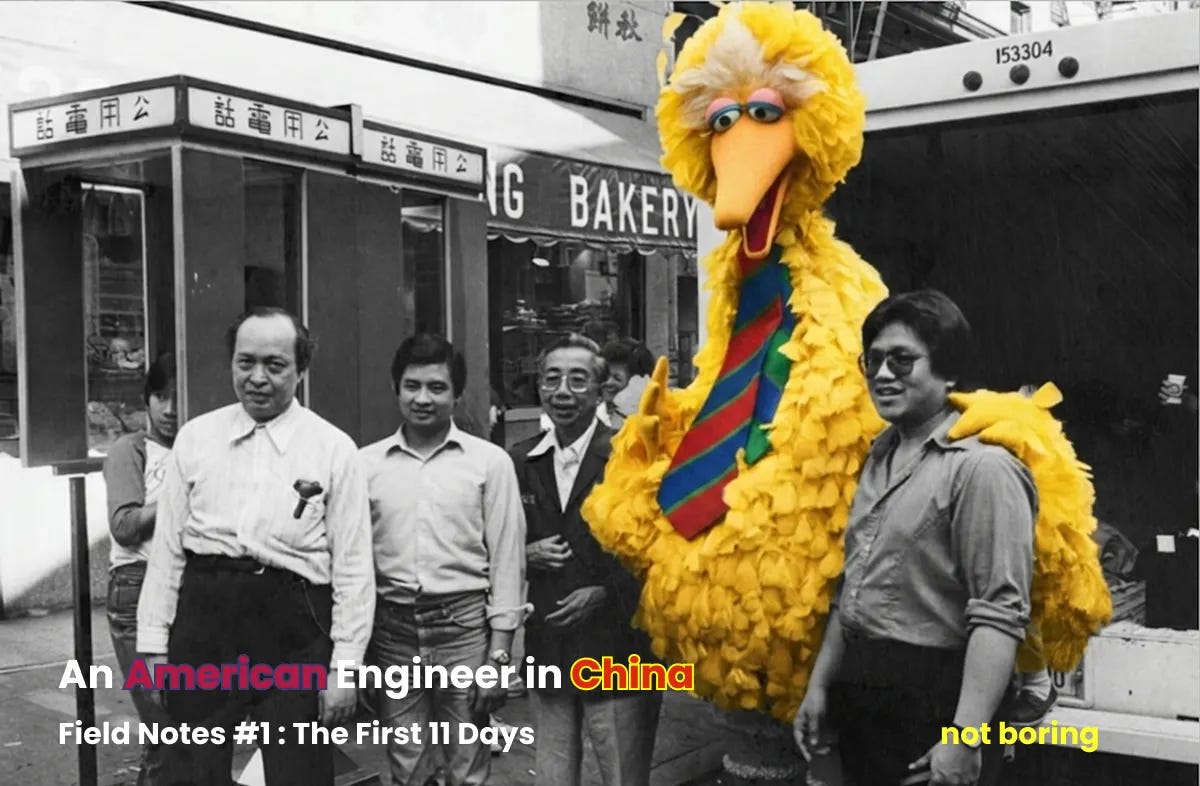
An American Engineer in China
Field Notes #1: The First 11 Days
Introduction
This piece will cover my first 11 days in China. The purpose of my extended trip is to learn about and meet with Chinese energy equipment companies and factories, but I’m also curious about China’s culture and financial ecosystem.
In the first section, I was an outsider getting a feel for China and getting invited to the right WeChat group chats. As I did, I began getting invited to factories and having discussions with more and more “mainlanders” who helped fill my knowledge gaps about the country. Throughout the piece, I’ll share a mix of my experiences and key takeaways.
Three Biggest Takeaways:
The China of 2036 will be vastly different than the China of 2026. Companies that used to manufacture luxury handbags are now becoming the brands themselves. Investors who used to copy American VCs are now running their own state-backed deeptech playbooks. Battery cell companies are becoming grid, datacenter, and asset-owning companies. If you aren’t heavily updating your mental model of China after this piece, then you will get blindsided.
China is heterogeneous. China has so many different dialects, dresses, jobs, climates, educational attainments, and personalities that I feel as though I could spend centuries in China learning new things. Beware of anyone who makes reductive stereotypes about the country, positive or negative.
China is big. Yes, this is “obvious,” but you don’t viscerally feel it until you casually see hundreds of skyscrapers in a row and single companies outproducing the industries of entire countries. Everything else just seems so…puny.
Section 1: Initial Thoughts
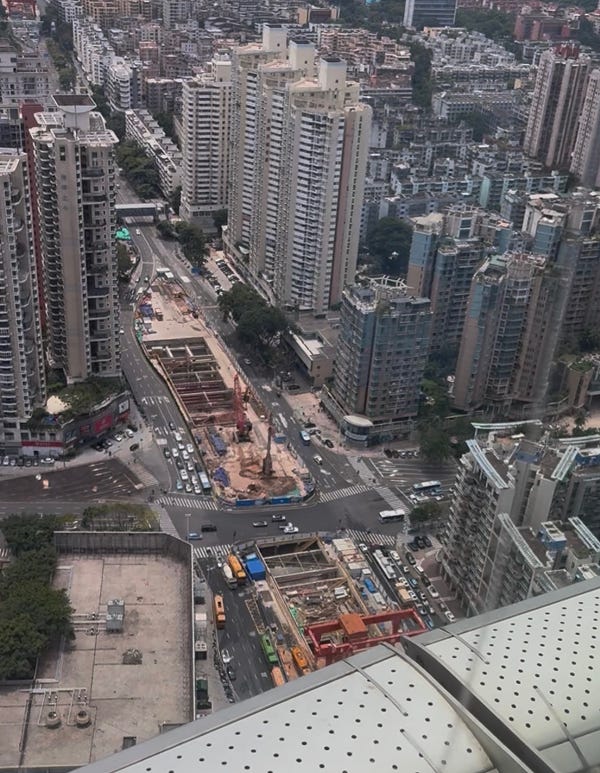
When I first arrived in China (or rather, Hong Kong, before heading into mainland Shenzhenbei the second day), I was incredibly shocked by the scale. The airport seems innocuous enough, although larger than most American international airports, but the moment you take a taxi into the city, everything becomes mind-bogglingly dense. In New York City, America’s densest city, there are around 900 buildings above 100 meters. In Hong Kong, there are 4000, filled to the brim with people in and around them. Frankly, it surprises me when people say that China is lying about the size of its population. You can feel the sheer size of everything here. Even the “suburbs” here can be millions of people large, with towering high-rises
stretching on and on and on.
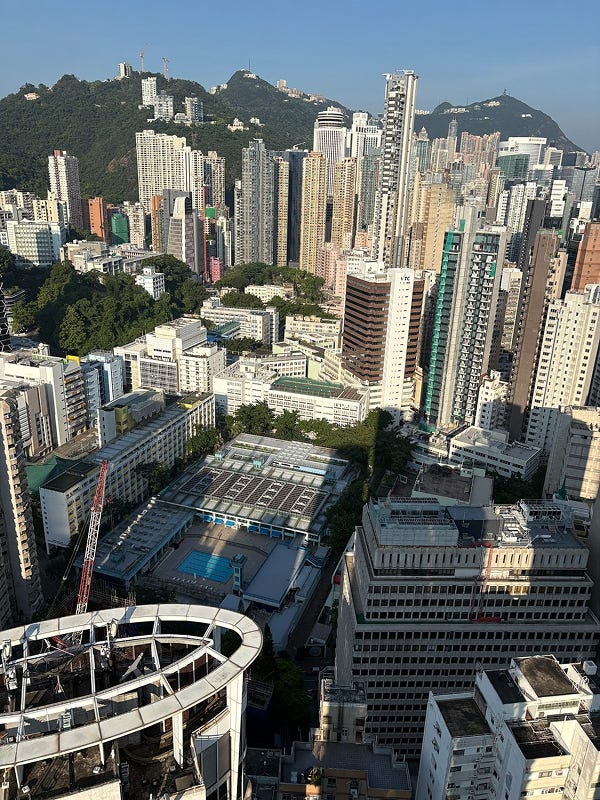
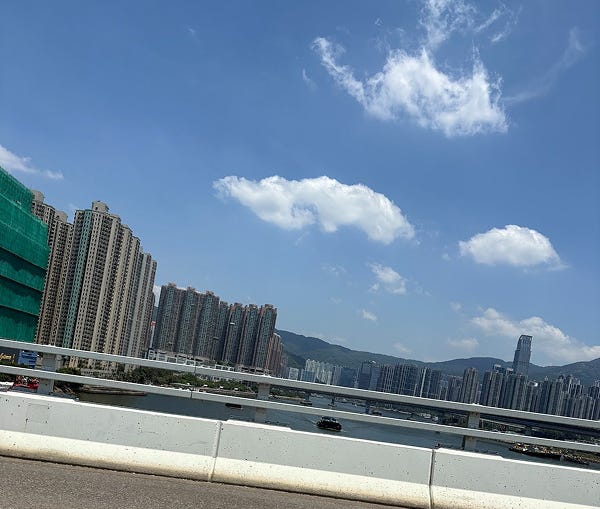
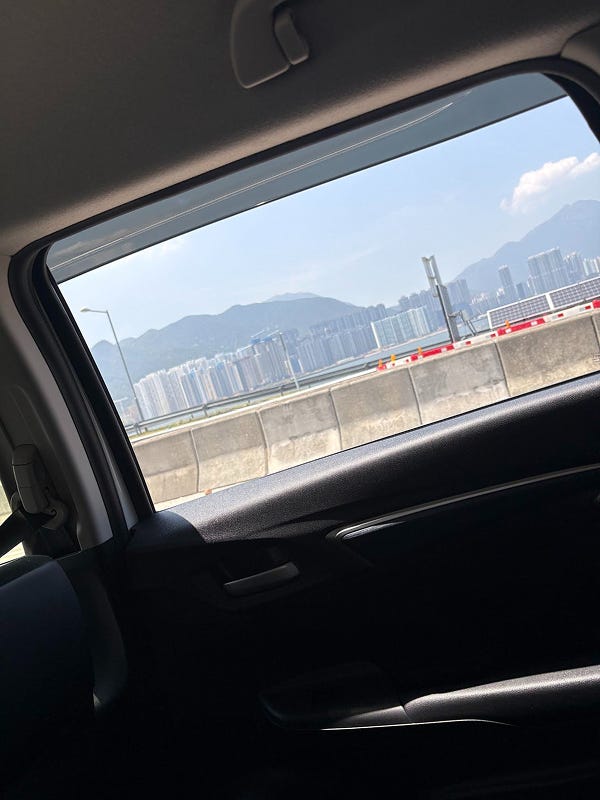
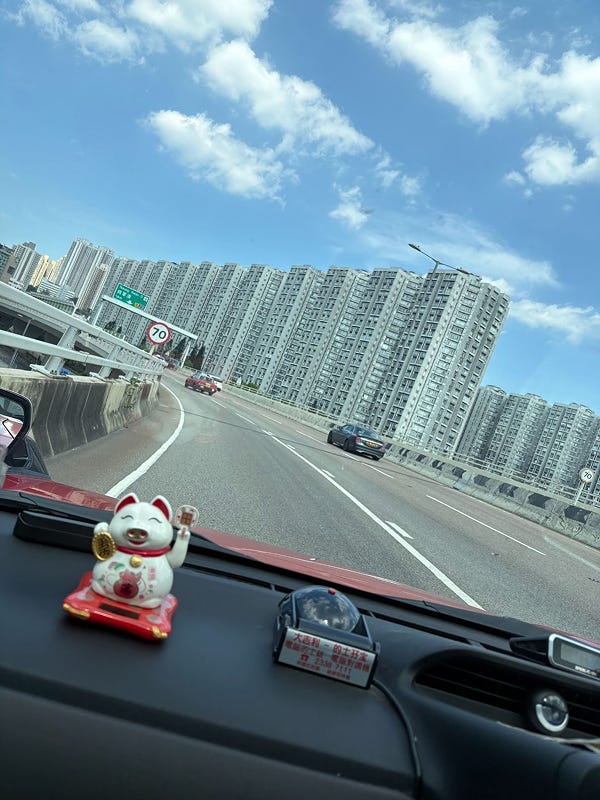
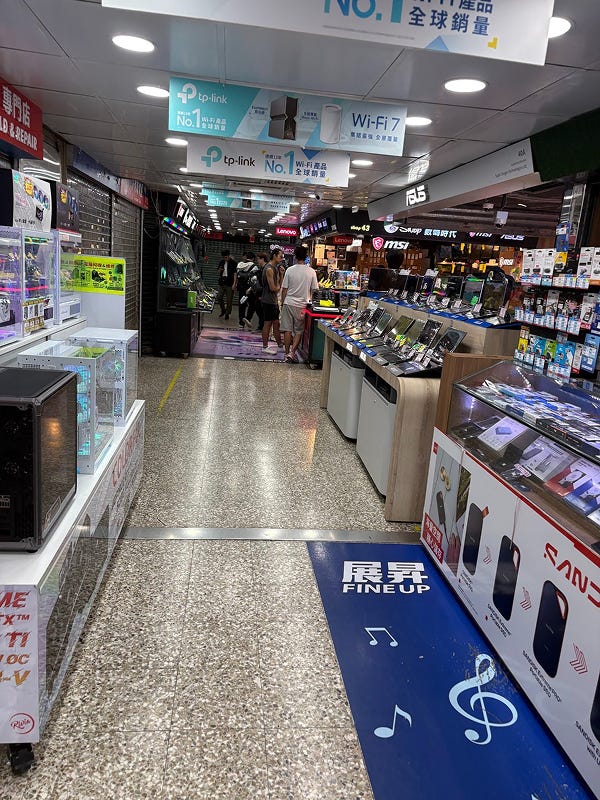
Being guided by my friend in Hong Kong, I could find anything anywhere. Hong Kong is a financial and trading hub (import/export businesses have created many wealthy individuals), and in 10 minutes I saw three separate stores selling professional-grade cellos. But things really got nuts when I walked into the malls and high-rise buildings. You could have an IKEA on floor 5, an ice skating rink on floor 10, and then a wave pool on floor 11. I truly never quite knew what to expect every time we entered a new building. For example, Toys “R” Us was a staple of my American childhood, and it went bankrupt around a decade ago. However, the Chinese arm of Toys “R” Us was always financially healthy, so it still exists in China. Similarly, many famous US brands in China are owned by the Chinese version of the company, despite sharing superficial similarities. The 5090 GPU I found in an electronics market here, though, was very much the same Nvidia as the US one.
Hong Kong is also interesting because many mainlanders refer to it more as an “antique of the British Empire.” Hong Kong used to be China’s dominant financial hub, partly because of its advantageous tax structure and lax rules compared to the mainland (changes in both during COVID led foreigners to flee to Singapore). However, Shanghai, Beijing, and even Shenzhen have grown rapidly since the 90s, giving Hong Kong competitors.
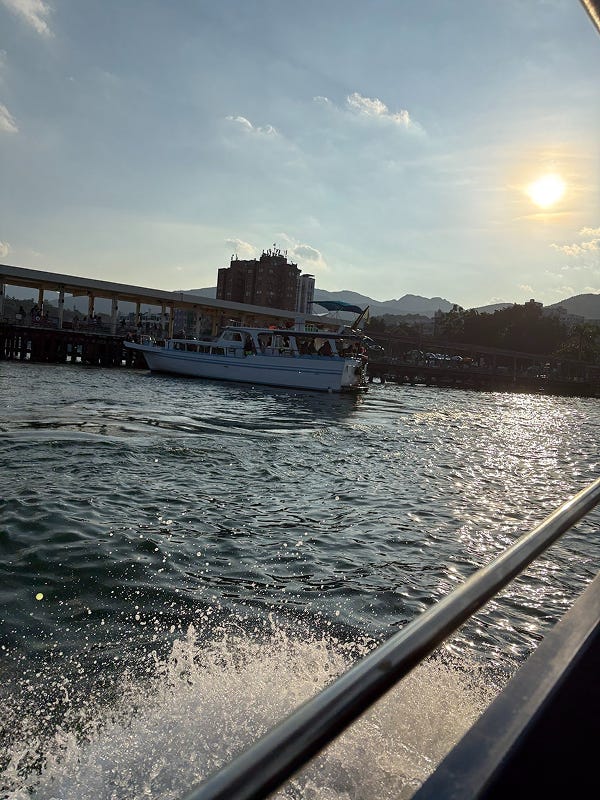
That said, Hong Kong has an abundance of great universities, many of them highly technical and sending out thousands of students. This is one of the city’s more lasting draws for mainlanders, along with Hong Kong’s nature. Near one of these universities, while taking the subway (which arrived every 2 minutes, had perfect AC, and moved millions of people a day), I first saw Hong Kong’s low-rises and was surprised by the size of its beaches and archipelagos. I took a speedboat to tour and visit some of the beaches, and was even more shocked by the number of wakeboarders and superyachts corralling around. It felt more like Monaco than the urban metropolis I expected.

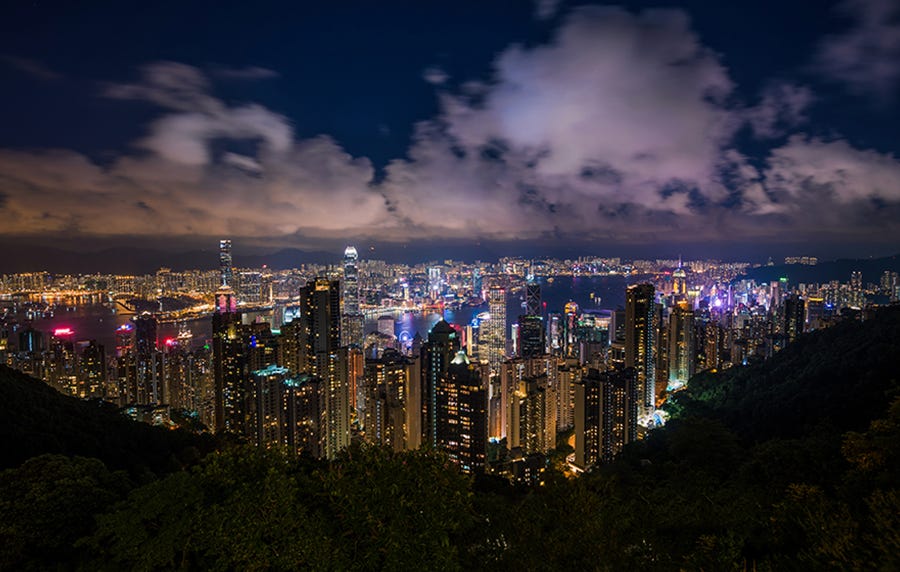
Heading back, although the locals will just drive up, you can hike up Hong Kong’s mountains to get a breathtaking view of the city. Hong Kong’s densest region is roughly 3x the size of Manhattan in terms of population, and from the tallest mountains you can even see Shenzhen. One of the buildings, around 500 meters tall, was covered in OLEDs gleaming pink, a cyberpunk obelisk staring at you from across the border.
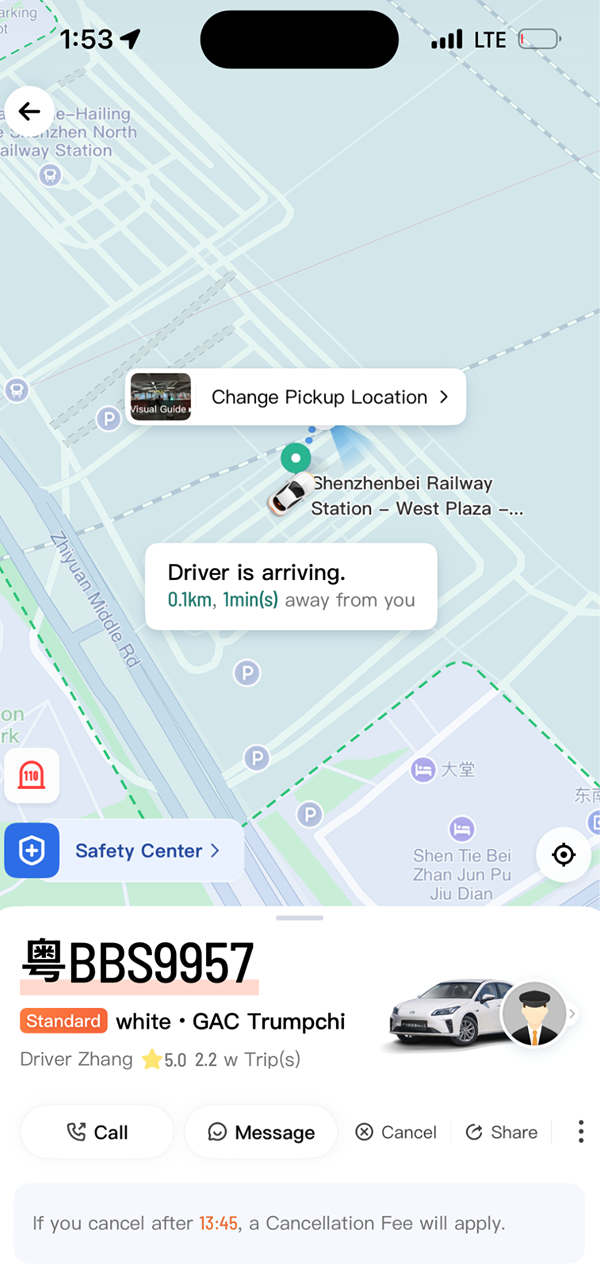
The next day I headed into Shenzhen, the famous “tech-bro” city, and I should’ve allowed a lot more time for immigration. It was my first time getting a lot of particular paperwork and processes done, like giving them all of my fingerprints while being watched by quite literally over a hundred cameras. So, by the time I got on the high-speed rail into the city (which, likely because it was in an urban area, only went 160 km/h), I was in Shenzhenbei, a train stop about 10km north of where I wanted to go. I should’ve gone to the Futianbei train stop because a lot of the urban scene, my hotel, and seemingly everything fun is more on the south side of the city, but it was still useful. Shenzhen, I’ve been told, is much more friendly to foreigners in terms of its infrastructure than other mainland cities (some of which have just straight-up zero English anywhere), but it was still quite a difference. Uber no longer really worked; you needed to have WeChat Pay or DiDi. Most signs had little to no English; the rate of foreigners dropped dramatically, and cigarettes and cameras watching you took their place.
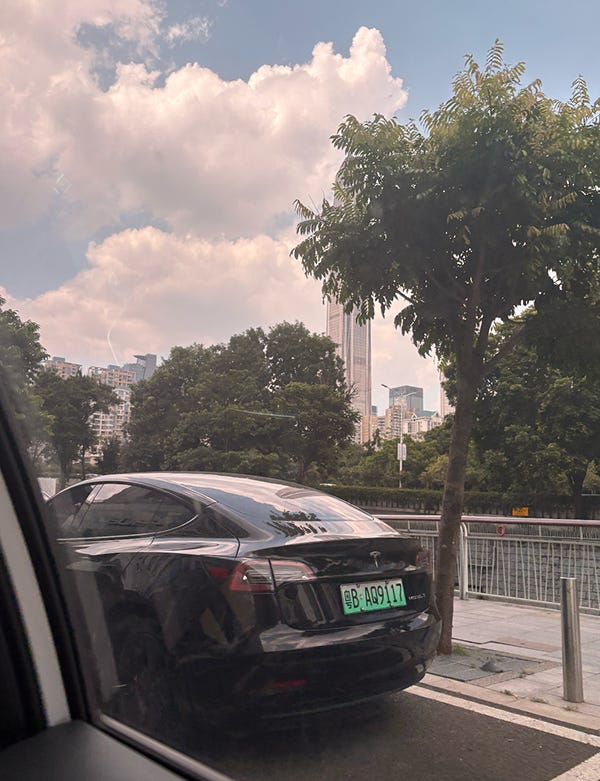
Most people who drive are in EVs; I saw very few gas-powered cars.
The McDonald’s that I scrambled to grab food at had a slightly different menu, but honestly wasn’t too different from an American one (besides some folks eating with plastic gloves, although most were just eating with their hands/utensils), before I headed into the core part of the city. I dropped my stuff off at my hotel, which, despite being super nice/multi-floor, was around $50 USD, where I met a friend who had moved to Shenzhen a year ago.
There, he introduced me to a ton of folks on WeChat (WeChat is where everyone does business; if some low-tier Alibaba factory responds to your email, then you know they’re going to be bad), and gave me a bunch of advice summarized in this italicized paragraph.
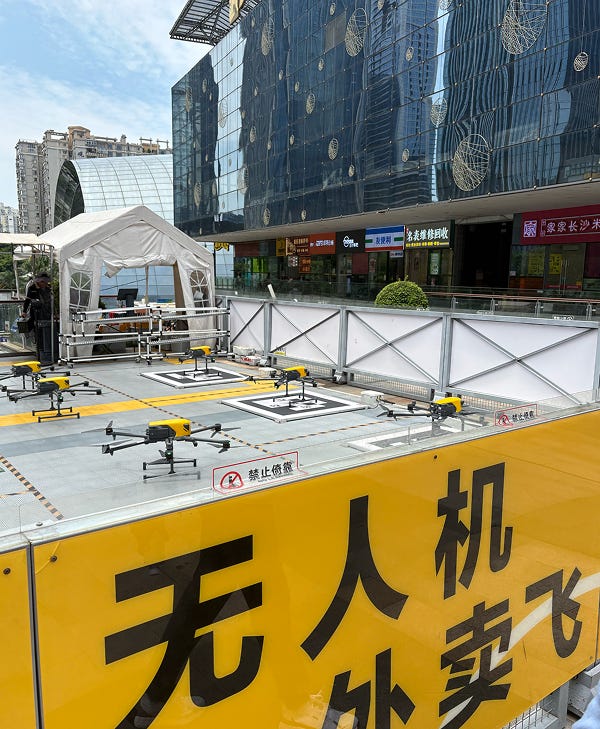
“Shenzhen is massive, it’s new (Deng Xiaoping’s SEZ 40 years ago), so nobody is “from there” the way they are from Beijing/Shanghai, culture is fairly welcoming, 100k people every day make something new so it changes all the time, even if you were here for a decade or two decades you would know so so so so so so little about the whole of it all, tier-1 manufacturing can be found in many parts of the world not just china but density of suppliers and supply chain make Shenzhen unmatched. APEC 2026, normally held in Beijing/Shanghai, is being held here for the first time because Xi likes the city and the government wants to show it off. It helps to be specific about who you want to meet because hardware specialists exist in every subfield you can imagine, and many universities offer 4-year/master’s degrees in manufacturing that are actually really good. No foreigner will ever get government subsidies (you may be well liked, and even a permanent resident in Hong Kong, but you will forever be a foreigner. Never forget that.) and that’s why you see so few here; they just get brutally outcompeted, but you can and should work with folks on suppliers/supply chain. Be careful about IP; people are super competitive here. If you want to cut costs and figure out expansions, don’t just think about input/output; you’ll get scammed. You need full process knowledge to figure out the limiting factors and how cheap things really are. He’s seen suppliers charge companies $200k for a machine that should have cost $20k. The food delivery guys can make a living here because the cost of living is so low, but they were often just scrolling e-girls on their phones while we were driving. However, if Meituan tried replacing them all with drone delivery, there would be so many riots in the streets.”
I then (after being guided by a friend who said “just come here, trust me”) entered an unexpectedly massive anime/cosplayer facility underground, with every possible character/combination you could imagine. There were blatant ripoffs of many characters (I know a Minion when I see one), but it was interesting to see the variety of genres. While I didn’t snap pictures of the cosplayers for fear of being rude, many elaborate anime cosplays in thick makeup, wigs, and costumes walked around Shenzhen.
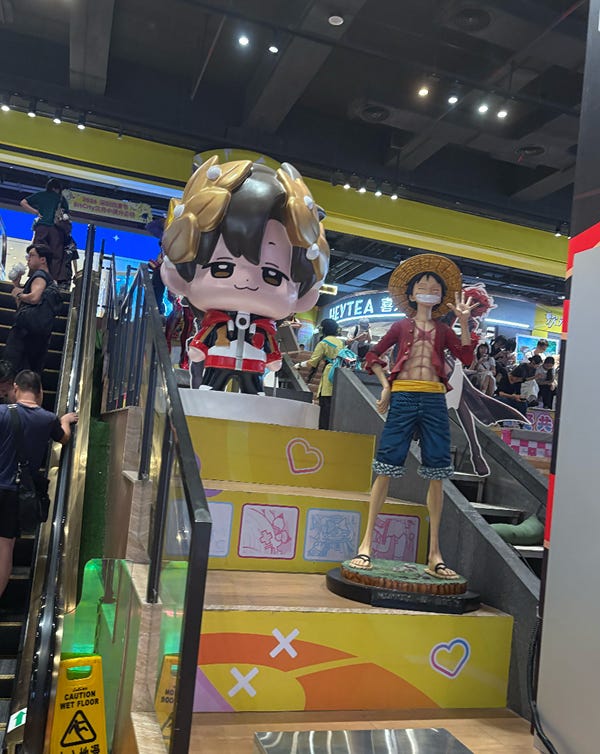
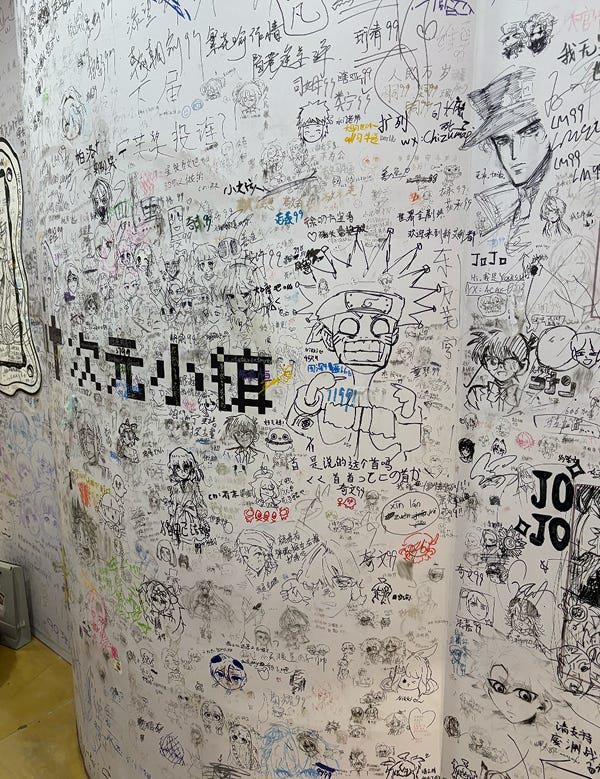
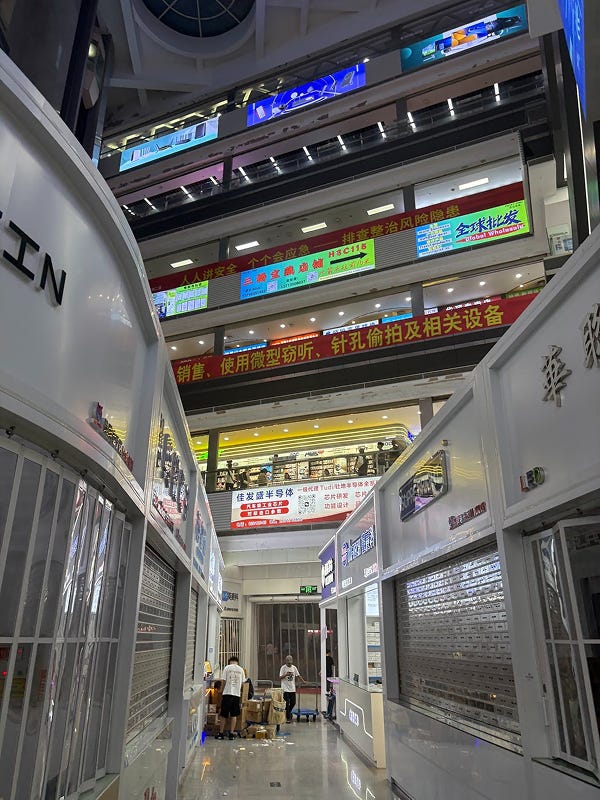
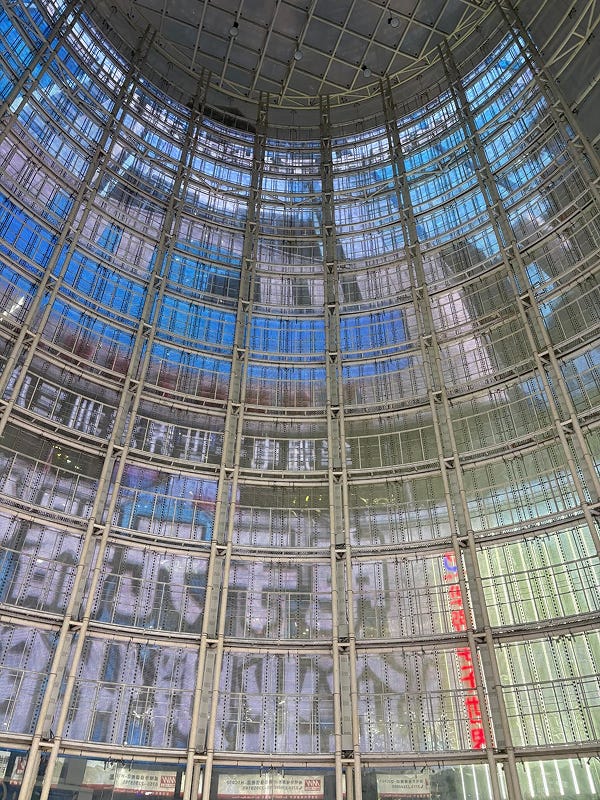
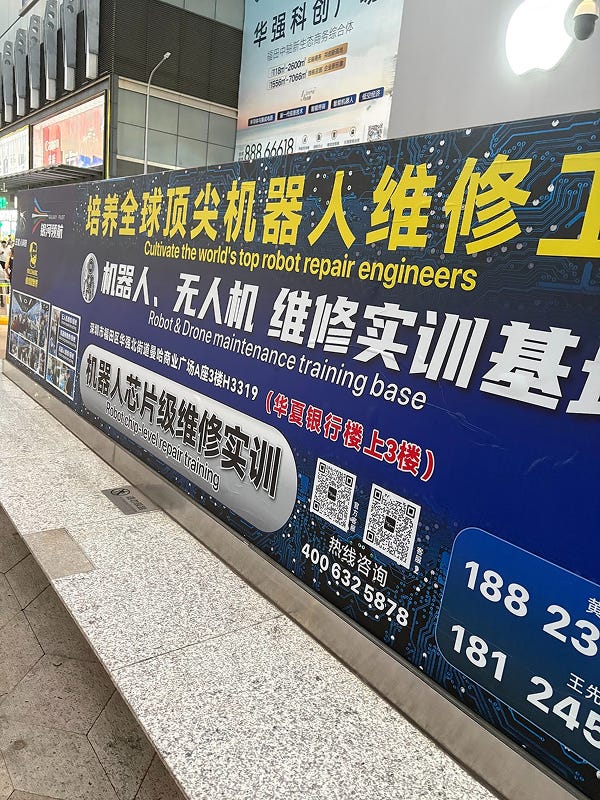
Afterward, I walked upstairs and spent a few hours around Huaqiangbei, Shenzhen’s famed electronics market. To be honest, it moderately blew my mind, and I say moderately only because the initial Hong Kong skyscrapers had completely shattered my worldview the prior day.
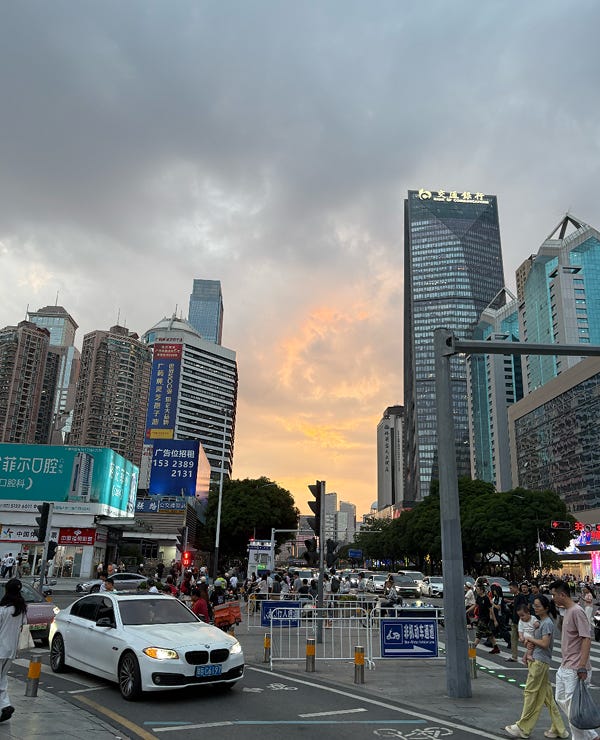
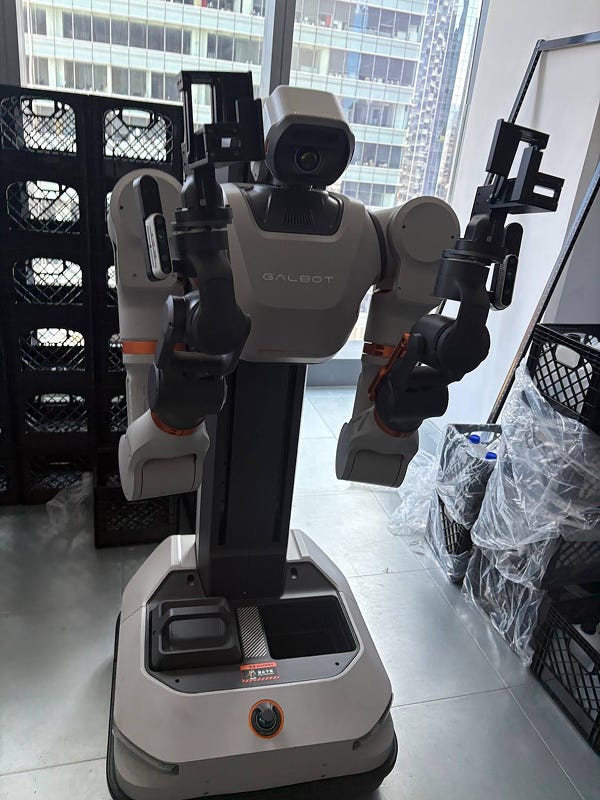
If you are a hardware nerd, you would’ve loved this place. Massive billboards advertised MOSFETs and spare motorcycle parts. I walked into a McDonald’s looking for a bathroom and ended up in a random 5-story electronics market. I saw every type of phone (Huawei stores included), drone, robot form factor- you name it; here, there was technicality (and the smell of solder wafting around) in the air. Plenty of small kids came up to me yelling “nihao nihao”, which was cute, although the 7-11 shockingly not taking international payment was not cute, as were the waves and waves of blisteringly fast scooters that threaten to run you over if you don’t dodge and weave around them.
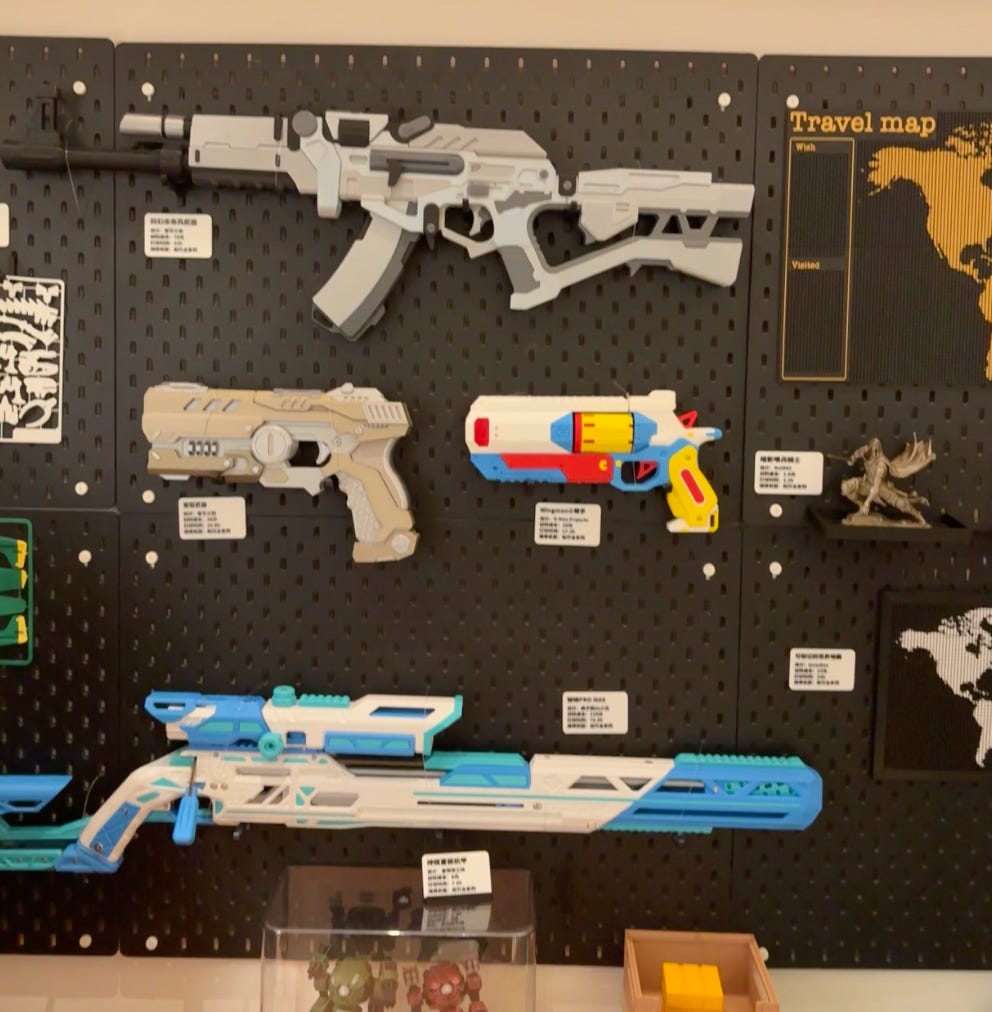
I went to the original Bambu Labs store in Shenzhen, where they proudly displayed that their 3D printers could make guns. That was probably one of the bigger culture shocks of the day, given the paranoia in the United States about ghost guns.
An interesting takeaway from the first few days is that we are not at the center of their universe.
America is certainly important and interesting to China, but China has the Greater Bay Area (which has more skyscrapers than all of North America and Europe combined, compared to our puny American Bay Area) and will come to dominate over the next 10, 20, 65 years. They’re going to spend over a trillion dollars on new infrastructure through the next decade, which goes so far here, and try to return to where they once were: the capital C greatest Civilization in the world.
Section 2: No More Foreigners
By the fourth day in China, I had begun to internalize a very important lesson: foreigners won’t be helpful here. This might be an exaggeration, but I see it as directionally correct. Even if you speak the language and have been in the country for decades, there is naturally a wariness that exists if you are not a Han Chinese person who was born in mainland China. That’s a big reason there are essentially no foreigner-run ODMs (Original Design Manufacturers) in Shenzhen.
Of course, even though China is a country pretty explicitly for Chinese people, it is not a homogeneous place. In a couple of hours, you can go from the center of a Tier-1 gleaming coastal city to see literal rice paddy farmers working in the fields. Some companies are almost entirely subsidized, while others take zero government money. There are people dressed in streetwear covered in tattoos, piercings, and dyed haircuts, while others are so straight-laced they would never even breathe incorrectly. Over 80% of people in China do not hold a college degree. Many buildings were in shoddy condition, yet they were surrounded by marvelous, glowing OLED obelisks.
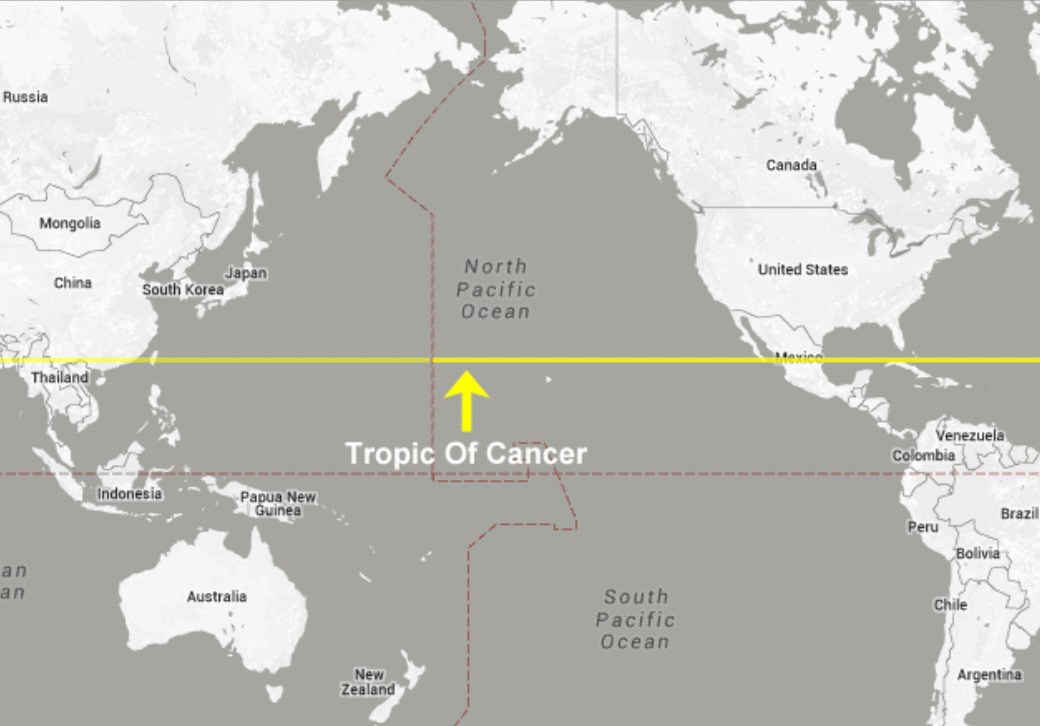
Shenzhen’s scenery is a visceral example of China’s heterogeneity. Show of hands: how many of you knew that Shenzhen, world capital of the hardware nerds, had palm trees? I certainly didn’t, although I suppose that it makes sense that there would be palm trees in Shenzhen and beach archipelagos near Hong Kong. It’s right near the Tropic of Cancer line of latitude, similar to where Cabo is. Of course, Shenzhen is a lot more mercantile and only mildly less alcoholic (debatable) than Cabo is.
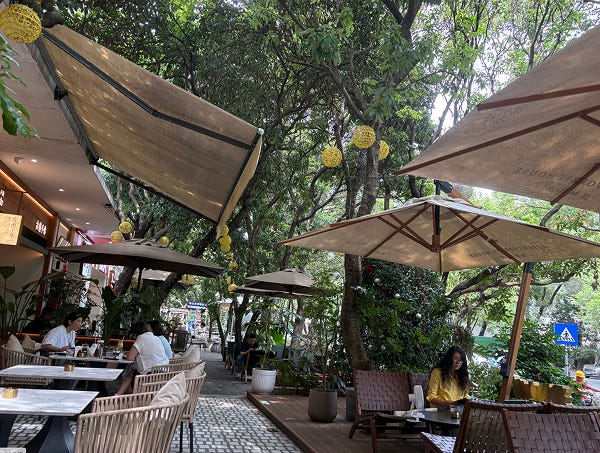
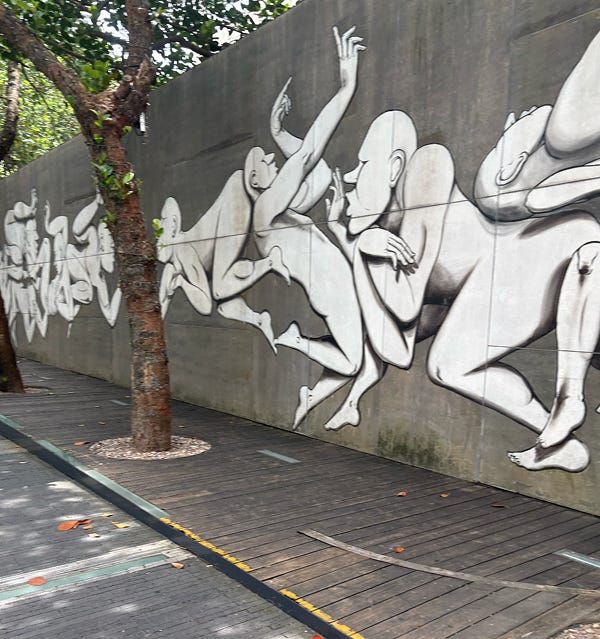
Similarly, how many people talk about Shenzhen’s creative district, which would not be out of place in a standard American or European coastal city? Just like in these countries, they also have nice little patios where you can order pastries and public art, which I will describe simply as “somewhat odd.”
On my fourth day, I visited a UPS and PCBA factory in Shenzhen.